

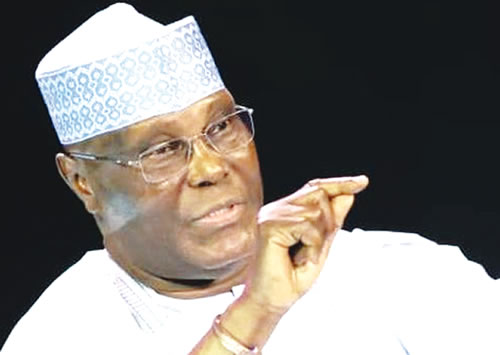

The Independent Media and Policy Initiative (IMPI) has expressed concerns over former Vice President Atiku Abubakar’s suggestion over reversal of subsidy removal if elected, warning that the policy could weaken investor confidence and create fiscal challenges.
In a policy statement issued in Abuja and signed by its Chairman, Dr. Omoniyi Akinsiju, the think tank said the proposal contained in Atiku’s planned economic recovery framework could send negative signals to investors regarding Nigeria’s regulatory environment.
According to IMPI, the proposed model would involve supplying crude oil to eligible public and private refineries at discounted rates, with the expectation that the savings would be passed on to consumers through lower fuel prices.
Akinsiju argued that the arrangement would introduce complex pricing mechanisms for commercial entities, including NNPC Limited and private refiners, which he said could undermine the principles of the Petroleum Industry Act (PIA) 2021.
“Atiku’s proposal also sends signals to global markets that Nigeria lacks regulatory predictability,” Akinsiju said.
“This policy shift would scare away international capital and freeze modern Public-Private Partnerships (PPPs), with repercussions for funding critical infrastructure projects.”
The think tank further maintained that the proposal effectively reintroduces a subsidy mechanism by replacing direct cash payments with discounted crude allocations to refiners.
According to IMPI, such an approach could reduce revenues accruing to the Federation Account, thereby affecting the financial resources available to federal, state and local governments for infrastructure and social services.
The group also argued that fuel subsidies have historically been regressive, as higher-income households tend to consume larger volumes of fuel than lower-income groups.
It added that government-controlled fuel pricing could distort market incentives and affect fuel distribution, particularly in rural and remote communities.
Drawing parallels with previous subsidy regimes, IMPI said Nigeria’s past experience showed that deductions linked to fuel subsidy payments contributed to fiscal pressures and limited public investment.
The organisation therefore cautioned against a return to policies it said had previously weakened public finances and constrained infrastructure development.
Atiku’s camp has previously argued that its proposed framework would redirect subsidy support from fuel importation to domestic refining in a bid to lower fuel costs and support local production.
The proposal remains part of ongoing debates over the future of fuel pricing, subsidy management and economic reform in Nigeria.

