

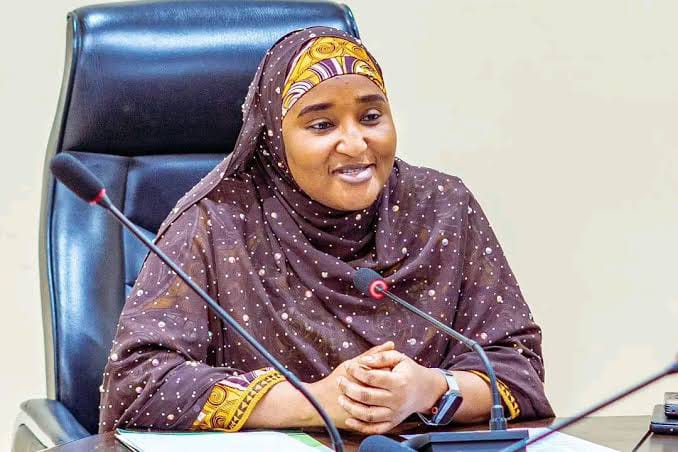

The Federal Government is overhauling Nigeria’s education system, with a major focus on closing gaps in teacher development after data showed that only about 10 per cent of teachers benefited from the roughly ₦20 billion allocated to states for teacher training in 2025.
Minister of State for Education, Prof. Suwaiba Said Ahmed, disclosed this while outlining reforms being implemented across the education sector under President Bola Ahmed Tinubu’s Renewed Hope Agenda.
She said the Federal Ministry of Education, led by the Minister of Education, Dr. Maruf Tunji Alausa, was strengthening access, improving quality and expanding human capital development across the education value chain.
Ahmed said a baseline assessment also found teachers who had spent between 25 and 30 years in service without participating in professional development, prompting the ministry to introduce new measures to widen access to training.
One of the measures is a zero rated digital teacher development platform accessible on Android devices to teachers in public and private schools across rural and urban communities. More than 60,000 teachers have participated in its first phase.
The ministry, she said, is also working towards making continuous professional development more structured and eventually mandatory under a Comprehensive Teacher Policy covering recruitment, training, welfare, deployment and career progression.
The policy is being developed in collaboration with the Teachers Registration Council of Nigeria and the Nigeria Union of Teachers.
Ahmed also announced an ongoing review of the national curriculum to reduce subject overload and shift learning away from excessive reliance on rote memorisation.
The revised approach is designed to emphasise competencies what learners understand, can apply and can demonstrate. The curriculum for pre service teachers is also being reviewed to better prepare teachers for modern classroom demands.
At the basic education level, the ministry is equally strengthening the allocation and monitoring of resources.
Ahmed said the Universal Basic Education Commission had revised its disbursement guidelines and funding formula to make interventions more responsive to actual needs, with stronger links between performance and additional support.
She added that under a new school grading framework, schools will be classified from A to D based on infrastructure, facilities, teacher qualifications and learner achievement. The grading is intended to guide targeted support while recognising sustained institutional performance.
At the tertiary level, the minister said the government was expanding capacity in medicine, pharmacy, science and engineering.
According to her, 10 medical institutions have been established or strengthened, while admission quotas in some institutions have been doubled or tripled to create additional capacity.
More than ₦400 billion, she said, has been invested in expanding capacity in critical fields, alongside stronger accreditation and verification processes.
Ahmed stressed that institutions must maintain adequate facilities, equipment and staffing beyond accreditation exercises.
She said the seven year moratorium on establishing new universities and other tertiary institutions would give existing institutions room to strengthen infrastructure, staffing and academic quality.
On student financing, Ahmed said the Nigerian Education Loan Fund (NELFUND) had supported more than 1.6 million students from about 322 universities, polytechnics and colleges of education.
Participation in the scheme is voluntary and requires annual application and verification. Once approved, beneficiaries can proceed with registration because NELFUND provides assurance for payment of approved institutional fees.
While acknowledging delays in some cases, she said the processes were being improved to make the scheme more responsive.
Ahmed also highlighted efforts to tackle Nigeria’s out-of-school children crisis, noting that existing estimates range from about 10 million to more than 20 million.
She said the wide variation underscored the need for reliable national data.
The ministry is therefore developing a national education data platform alongside a nationwide mapping exercise.
The National Commission for Almajiri and Out-of-School Children Education and the National Commission for Nomadic Education have completed their respective mapping exercises, while the Agency for Mass Education is nearing completion.
Ahmed said the mapping exercise was being linked directly to enrolment and interventions rather than treated merely as data collection.
Traditional and religious leaders are also being engaged to help reach communities where large numbers of children remain outside the formal school system.
As part of the response, the Federal Government is establishing bilingual schools combining religious and conventional education.
Ahmed said the initiative was being prioritised in eight states with some of the highest numbers of out-of-school children. Three schools are planned in each state, with four planned in two of the states.
The schools are designed with boarding capacities of about 1,500 to 2,000 learners.
She said the model was already operational in Maiduguri and Kano, with preparations ongoing in the other participating states.
The minister also outlined the Almajiri Policy, which defines the responsibilities of the Federal, state and local governments, parents and communities in providing education for children in the Almajiri system.
A key component is the integration of religious and conventional education through an Accelerated Basic Education Curriculum that condenses basic education into four levels while accommodating learners who enter the system at an older age.
The policy also provides a minimum age for entry into Alharma schools and was developed through consultations with Islamic sects, Alharma teachers and other stakeholders.
Beyond conventional academic pathways, the ministry is expanding Technical and Vocational Education and Training as part of its human capital development strategy.
Ahmed said a national skills gap assessment identified about 40 trades, with 25 prioritised for immediate attention.
The first application cycle attracted about 1.3 million applications, with more than 100,000 beneficiaries trained through public and private training centres.
Participating centres received ₦30,000 per trainee, while beneficiaries received ₦22,500 for transportation.
The second cohort attracted about 1.8 million applications, with support increased to ₦50,000 per trainee for participating centres and ₦30,000 for beneficiaries.
Participants are expected to undergo assessment under the National Skills Qualification Framework and receive starter packs to support their transition into employment or enterprise.
The government is also promoting innovation and entrepreneurship among university students.
Ahmed highlighted the Student Venture Capital Grant, which provides up to ₦50 million for students with scalable innovation projects.
She also cited the Entrepreneurship, Business and Innovation Centre programme, which began at the University of Lagos and is being expanded to 16 additional universities to provide entrepreneurship training, mentoring and access to funding alongside academic study.
Ahmed said data and digitalisation would remain central to monitoring the reforms.
She added that the ministry is strengthening learner level data, digitising processes and expanding electronic monitoring to improve planning, resource allocation and assessment of results.
School grading, national assessments and e-monitoring, she said, would provide evidence on learning outcomes, teacher development, access and institutional performance.
The reforms, according to the minister, will ultimately be measured by improvements in learning outcomes, stronger teacher capacity, expanded access to education, increased skills opportunities and a reduction in the number of children excluded from the education system.
She reaffirmed her commitment to working with Alausa to sustain the reform programme and ensure that policies and programmes translate into measurable outcomes for learners, teachers and institutions.
Ahmed said the Federal Government remained committed to strengthening the foundations of Nigeria’s education system and using education, skills development and human capital growth to expand opportunities for Nigerians.

