

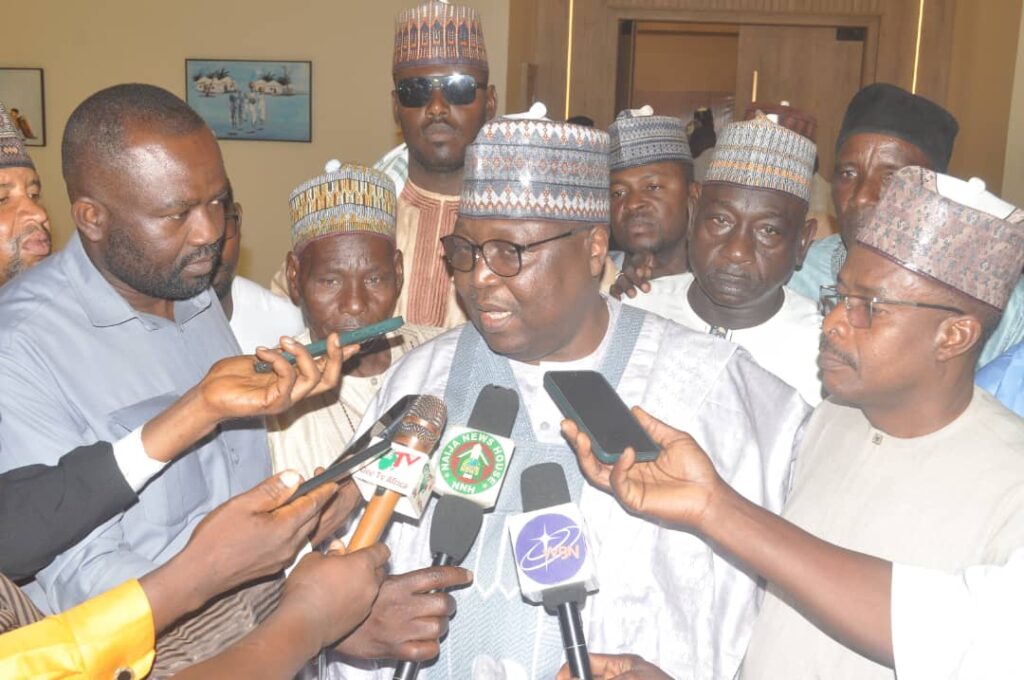

Senator Samaila Kaila (APC-Bauchi North) has raised concerns over the high rate of lawmaker turnover in the National Assembly, warning that a lack of institutional memory is undermining Nigeria’s legislative efficiency.
Speaking on Monday after picking up his nomination and expression of interest forms at the All Progressives Congress (APC) headquarters, Kaila argued that the influx of inexperienced lawmakers has resulted in a “dangerous lack of continuity.”
High Turnover and Legislative Output
Kaila revealed that approximately 80% of current Senate members are first-time legislators. He noted that this “reset” of experience every election cycle disrupts the stability of the chamber and slows the pace of lawmaking.
”The legislature is not a place for constant turnover,” Kaila stated. “It runs on memory, experience, and training. Strip that away, and you weaken the entire system. When you reset your experience every election cycle, you pay the price in weak output.”
Clarification on Constituency Projects
Addressing the long-standing public debate over constituency projects, the lawmaker clarified the division of labor between the arms of government. He emphasized that legislators do not execute physical projects or manage the associated funds directly.
- The Legislative Role: Facilitating access and advocating for inclusion in the budget.
- The Executive Role: Awarding contracts and executing the construction of roads, hospitals, and schools.
”Legislators only facilitate access. We don’t build roads or hospitals; we push for them,” Kaila clarified, seeking to distance the National Assembly from direct responsibility for project implementation.
National vs. Local Mandate
In a move that may prove controversial among the electorate, Kaila also stressed the broader scope of a senator’s responsibility. He argued that while senators represent specific districts, their primary duty is to serve the interest of the entire nation.
This stance highlights a growing tension between the constitutional role of a federal lawmaker and the localized expectations of voters who often measure a representative’s success by visible local infrastructure.

