

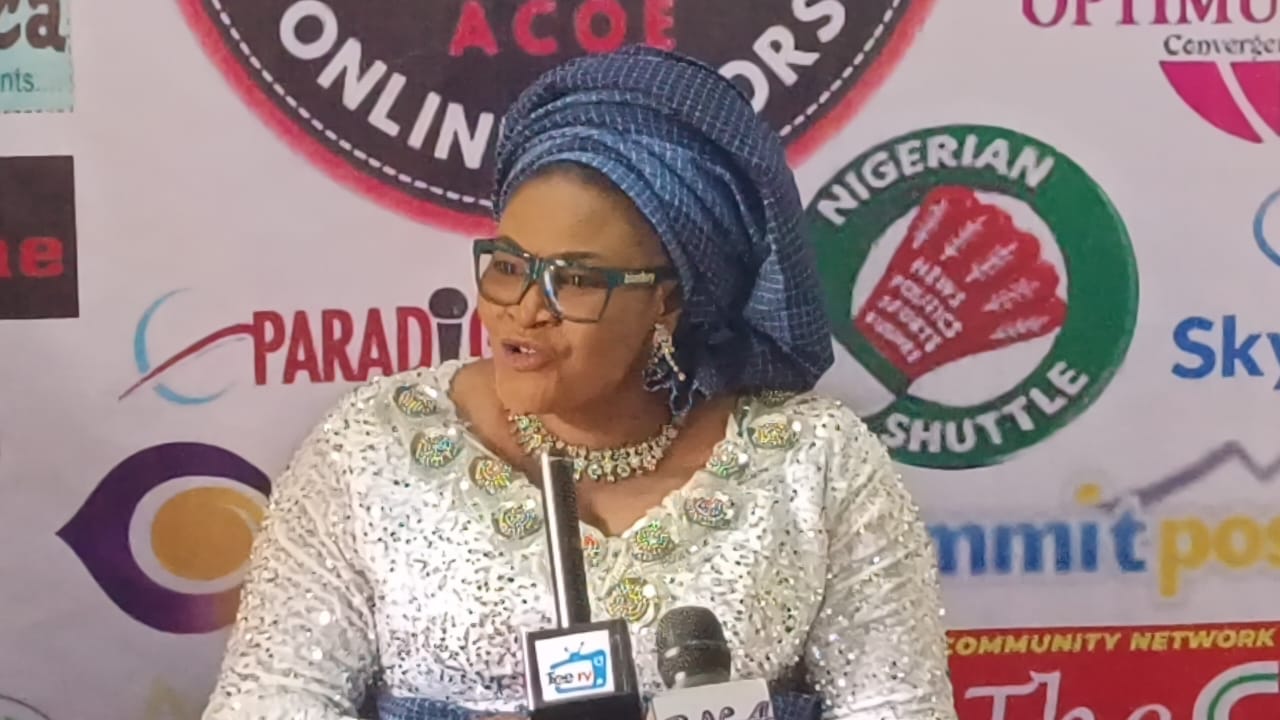

The 2027 senatorial candidate of the Peoples Redemption Party (PRP) in the Federal Capital Territory (FCT), Dr Juliet Muoneme, has pledged to sponsor legislation aimed at ending cattle roaming on Abuja roads and establishing a structured livestock management system if elected.
Muoneme made the commitment during a media engagement with members of the Association of Corporate Online Editors (ACOE) in Abuja.
She said the proposed legislation would regulate cattle movement while providing designated ranches and other facilities for livestock owners across the territory.
According to her, the initiative would not focus solely on restricting cattle from public roads but would also provide solutions for livestock management.
“Not just stopping them from moving, but how do we take care of them too,” she said.
Muoneme argued that the FCT has sufficient land to accommodate organised ranches and other livestock facilities.
The proposal comes amid continued concerns over the presence of cattle on major roads in Abuja despite efforts by the FCT Administration to curb open grazing.
In 2021, the administration announced a ban on open grazing and proposed designated grazing areas within the territory.
The issue remained unresolved in 2026, prompting FCT Minister Nyesom Wike to apologise to residents over the continued presence of cattle on Abuja roads.
Muoneme said organised ranching would reduce accidents and other safety risks associated with wandering livestock while creating economic opportunities in meat production, dairy, hides and skins, and other segments of the livestock value chain.
Drawing from her experience in livestock management, she maintained that cattle can be effectively kept in designated locations rather than allowed to roam freely.
She described the proposal as a “two bills in one” approach, combining regulation of cattle movement with measures aimed at improving livestock management and supporting cattle owners.
The PRP candidate said the objective was not to criminalise livestock ownership but to establish an organised system that protects residents and improves conditions for livestock operators.
Muoneme explained that the initiative forms part of her broader FCT RISE Agenda, a policy framework she said would guide her representation if elected to the Senate.
According to her, the agenda focuses on representation, research, innovation, inclusion, stewardship, entrepreneurship and empowerment, while addressing issues such as housing, youth unemployment, skills development and access to economic opportunities across the six area councils of the FCT.
She also proposed partnerships involving government, private developers and financial institutions to expand access to affordable housing through mortgage schemes.
In addition, she outlined plans for an automobile hub where mechanics, electricians and other artisans would work alongside engineering graduates receiving practical training.
Muoneme said her decision to seek public office was driven by a desire to provide practical solutions to societal challenges.
“Politics is not dirty. Politics is about leadership. Politics is service,” she said.
She added that an FCT senator should serve as a strong advocate for residents across the six area councils and help drive policies and projects that improve their quality of life.

