

The Nigerian Education Loan Fund (NELFUND) has disclosed that it has disbursed more than ₦375 billion to over 1.8 million Nigerian students since the commencement of the Federal Government’s student loan scheme in 2024, urging ministries, departments and agencies (MDAs) to intensify awareness to enable more eligible students to benefit.
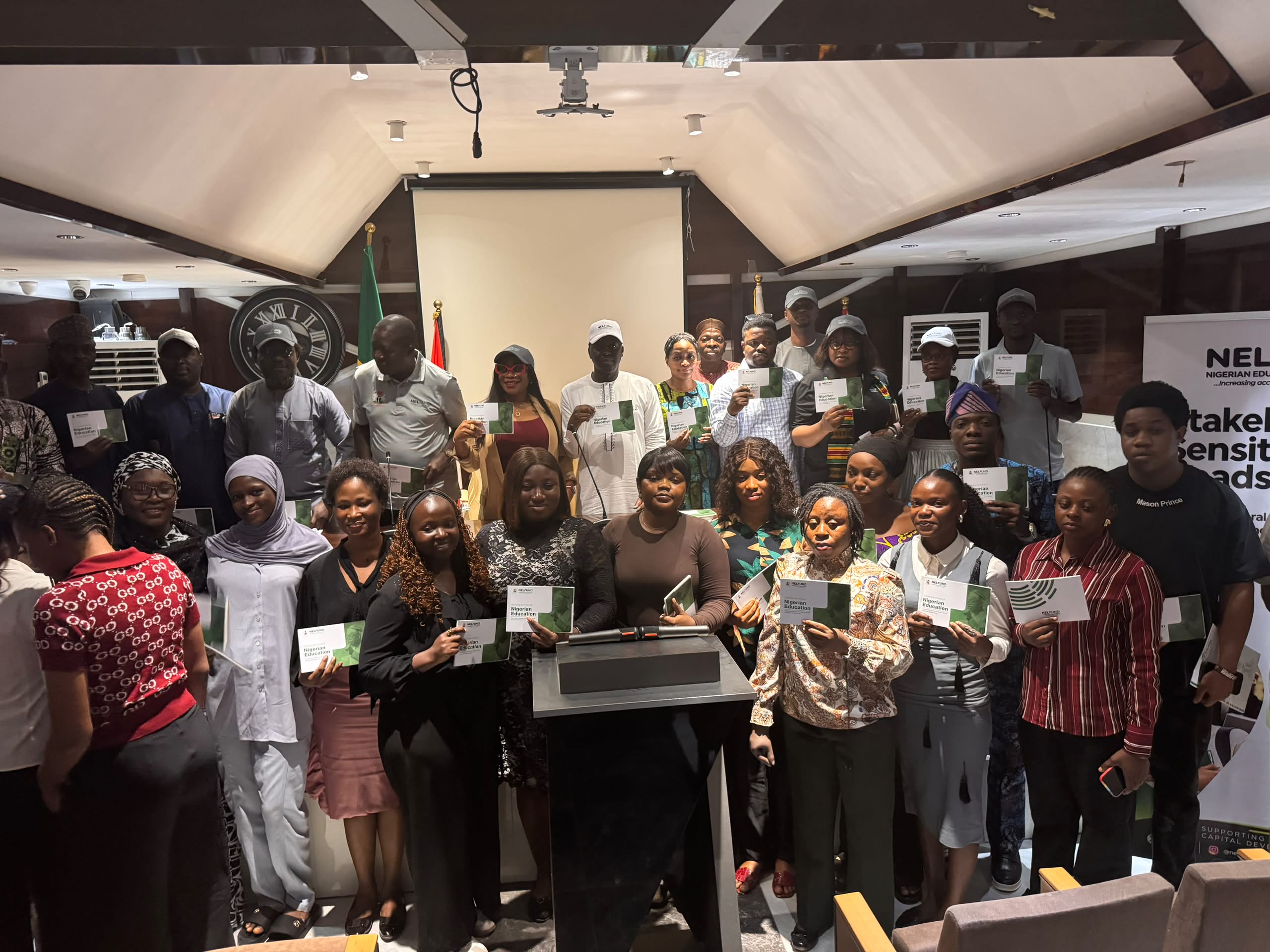
The Managing Director of NELFUND, Akintunde Sawyeer, made the call during a stakeholders’ sensitisation roadshow organised by the Fund at the Federal Ministry of Interior in Abuja.
Sawyeer, who was represented by the Director of Strategic Communications, Mrs Oseyemi Oluwatuyi, said government institutions had a critical responsibility to promote the scheme and ensure that its benefits reached eligible students across the country.
He explained that the sensitisation exercise was aimed at deepening stakeholders’ understanding of NELFUND’s mandate, operations and the financial assistance available to students pursuing higher education.
He urged participants to support the awareness campaign, noting that ministries were important partners in advancing national development through improved access to education.
Speaking at the event, NELFUND’s Director of Monitoring and Evaluation, Aliyu Mohammed, said the over ₦375 billion disbursed covered institutional fees and monthly upkeep allowances across four academic sessions.
He described the development as a significant milestone in the Federal Government’s efforts to expand access to higher education.
Mohammed recalled that NELFUND was established under the Students’ Loan Access to Higher Education Act 2024, signed into law by President Bola Tinubu in March 2024, to provide financial assistance to eligible students in public tertiary institutions.
He said the scheme was designed to remove financial barriers to higher education, reduce dropout rates arising from financial difficulties, promote human capital development and ensure equitable access to quality education.
The director emphasised that the application process was transparent and automated, stressing that eligible students did not require political or personal connections to access the facility.
According to him, applicants must be Nigerian citizens aged 18 and above and have secured admission into a federal or state-owned public tertiary institution.
Other requirements include Joint Admissions and Matriculation Board (JAMB) admission details, National Identification Number (NIN), Bank Verification Number (BVN) and relevant bank account information.
Addressing the age requirement, Mohammed explained that students admitted at 16 or 17 years would have to wait until they turned 18 before applying because of the contractual nature of the loan.
He added that applicants were not required to provide guarantors.
Mohammed explained that the loan comprised two components: institutional charges and upkeep allowances.
While institutional charges covering approved school fees are paid directly to beneficiaries’ institutions, the upkeep component provides students with a monthly allowance of ₦20,000 to support their living expenses.
He said students could choose whether to access the upkeep allowance, although applications for institutional charges were mandatory under the scheme.
On repayment, Mohammed said beneficiaries would begin repayment two years after completing the National Youth Service Corps (NYSC) programme, provided they had secured employment.
He explained that NELFUND would use beneficiaries’ BVN details to monitor their employment and income status, while those who remained unemployed would be required to update their status on the Fund’s portal every three months.
He stressed that repayment would only commence when beneficiaries secured employment, adding that the loans were interest free.
According to him, beneficiaries would repay only the actual amount received, without additional interest or inflation related adjustments.
He illustrated this with a ₦100,000 loan, explaining that a beneficiary would repay the same ₦100,000 regardless of how many years had elapsed before repayment commenced.
On the application process, Mohammed said students were required to apply through NELFUND’s online portal after their respective institutions had uploaded their records.
Applicants must provide their admission letters and student identity cards for verification, while their institutions are required to confirm their admission status and continued studentship before approval.
He added that applications would undergo further reviews, auditing and financial processing, noting that disbursement could take a minimum of seven working days after the final review stage.
The director further disclosed that loans would be written off in the event of a beneficiary’s death, assuring that the Fund would not pursue the deceased student’s family for repayment.
However, Mohammed expressed concern over disparities in the regional distribution of beneficiaries, revealing that the North-West accounted for the highest proportion at 20.8 per cent, while the South-East recorded the lowest at 5.9 per cent.
He said the disparity underscored the need for intensified sensitisation campaigns to ensure that students across all geopolitical zones were adequately informed about the scheme.
Mohammed consequently urged ministry officials, parents and guardians to take an active role in disseminating information about the loan facility, particularly among students who might not be aware of the opportunity.
He said wider awareness and participation would help ease the financial burden on parents and guardians struggling to meet the rising cost of higher education.

