


In the policy briefs and economic journals of the Global South, China’s lifting of 800 million people out of poverty is frequently reduced to an abstract, staggering math problem.
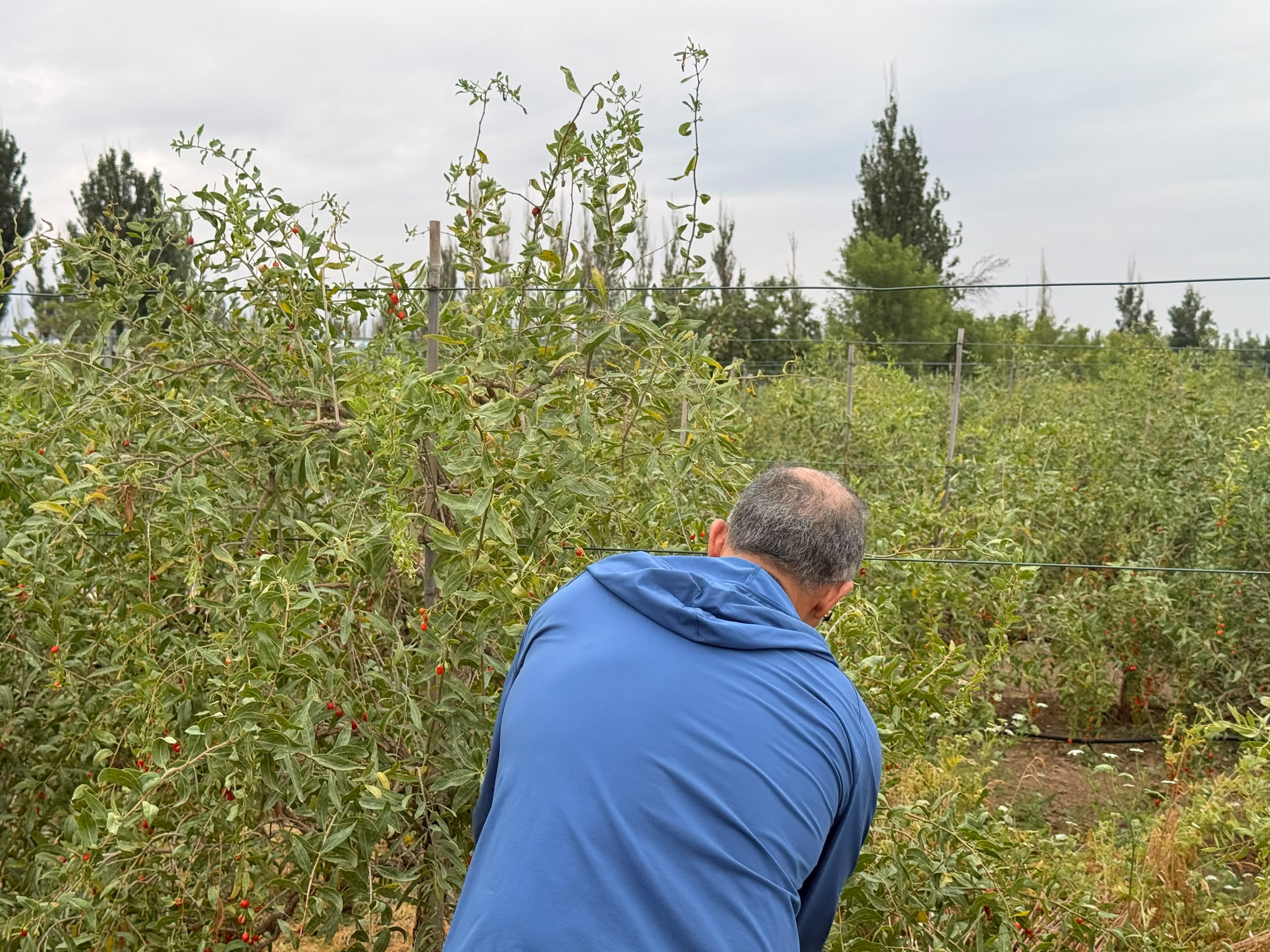
But standing in the sun-drenched fields of Ningxia, watching local farmers transform a modest goji berry harvest into a high-tech engine of community wealth, a delegation of 19 African journalists saw something else entirely: a human story.
The delegation brought together media professionals from seven diverse African nations Nigeria, South Africa, Zambia, Zimbabwe, Tanzania, Kenya, and Ethiopia.
For these senior journalists, the 10-day tour of China was not merely an exercise in diplomatic pleasantries.
It was a firsthand look at how deliberate policy directly alters human lives.
”The fact that China lifted over 800 million people out of poverty is not just a statistic, it is a lesson for the Global South,” reflected Idehai Frederick, Head of the African Mainstream Media Delegation, during a closing address to Ma Hui, the Vice Minister of the International Department of the CPC.
The journey took the delegation of the African Mainstream Media from the rural cooperatives of Ningxia to the bustling diplomatic corridors of Beijing.
In Ningxia, the delegation observed an ecosystem where technology, local pride, and targeted governance intersected.
Smallholder farmers were not left to fend for themselves; instead, digital tools connected their traditions to global markets, creating stable, dignified livelihoods.
To the visitors, the fields of Ningxia felt intimately familiar mirroring the agricultural potential of rural communities back home across Sub-Saharan Africa. The difference lay in the execution.
”Our key takeaway is simple: development is possible with vision, discipline, commitment to the people, and political will,” Frederick said.
“Seeing goji berry farms transformed into engines of income, seeing rural communities connected to markets through technology and cooperative models, showed us how comparative advantage, when combined with policy focus, can change lives.”
As the delegation prepares to return to newsrooms stretching from West to East and Southern Africa, they carry a renewed sense of possibility.
The ultimate lesson of the tour was that poverty is not a permanent geographic destiny, but a problem solvable by human determination and structured policy.
This contemporary transformation of Ningxia deeply echoed the insights of another international group traversing the region.
Francesco Maringiò, Head of the European Journalists’ Delegation and President of the Italy-China Promotion Association of the New Silk Road, addressed representatives of the Government of the Ningxia Hui Autonomous Region, drawing a straight line from the hardships of China’s past to its current triumphs.
”We are a delegation of journalists and political party representatives from many countries and continents, and we are here for the final stage of a journey through the key locations of the Long March,” Maringiò noted.
”We have been to Jiangxi, to Yeping, where the First National Congress of Soviets was held.
“We passed through Guizhou, visiting Guiyang, where we saw how big data puts people at the center. And today, we are here in Ningxia. It was here that the Long March ended, in October 1936… It was the final stage of the Long March, and it is the final stage of our journey as well.”
Maringiò emphasized that the historic Long March was far more than a military retreat. It was a crucible that forged a new kind of human being one capable of breaking with centuries of submission.
In Ningxia, the Red Army survived by acting not just as soldiers, but as an army of teachers and missionaries.
They won the trust of local Hui communities by respecting their religious customs, supporting a provisional Muslim government, and teaching the residents of Xiji who had plenty of potatoes but didn’t know how to preserve them how to turn their harvest into starch noodles. To this day, local memory still affectionately calls them “Red Army noodles.”
”This dual role, military and at the same time educational and organizational is, for me, the key to understanding what the Communist Party of China still is today,” Maringiò explained.
“Because that same role of guidance and education toward the most vulnerable communities did not end in 1936. It continues. We see it in the fight against poverty: in this region alone, nearly 800,000 people have been lifted out of absolute poverty over the past decade.”
Maringiò observed that this success did not stem from cold, spontaneous market forces. It happened because local committees remained on the ground guiding cooperatives, training neighbors, organizing families, and intervening where human suffering was most acute.
“The army of teachers and missionaries that crossed Ningxia ninety years ago has not disappeared. It has simply changed its form.”

