

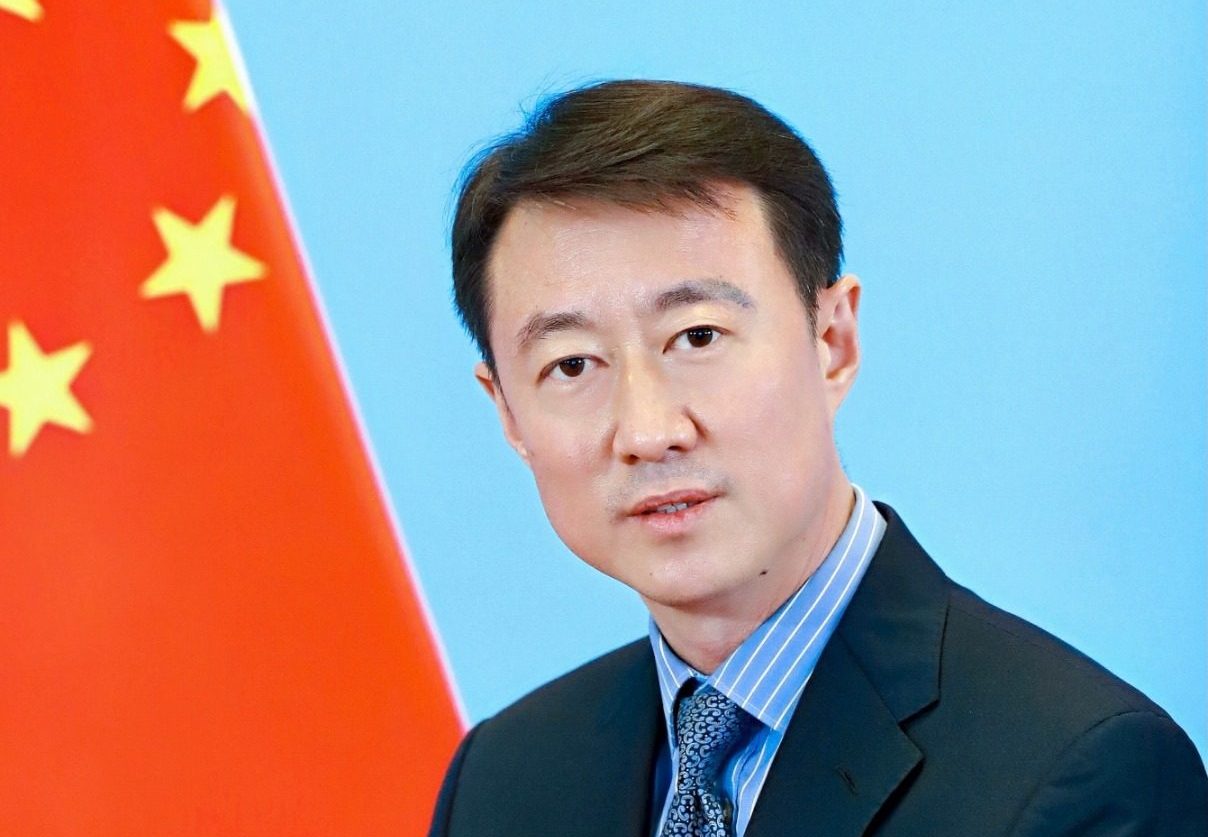

China’s commitment to strengthening internal Party governance remains central to its modernisation drive and long-term development strategy, according to Chinese Ambassador to Nigeria Yu Dunhai.
Writing on the outcome of the Fifth Plenary Session of the 20th Central Committee of the Communist Party of China (CPC), Yu said the meeting adopted a resolution on advancing full and rigorous Party self-governance, which he described as providing a political foundation for China’s national development goals.
The ambassador said the CPC’s emphasis on self-reform and anti-corruption efforts had helped strengthen governance and maintain political stability.
According to him, the Party’s capacity for self-correction and institutional improvement has supported China’s economic growth and social development.
Yu cited China’s industrial expansion, poverty alleviation achievements and the growth of its middle-income population as examples of the results of what he described as effective governance.
He said China has built the world’s largest industrial system, maintained its position as the leading manufacturing nation and lifted hundreds of millions of people out of poverty.
The envoy also highlighted China’s role in the global economy, noting that the country has remained a major contributor to world economic growth.
He said decisions taken at the CPC plenary session would support China’s continued opening-up and contribute to global industrial and supply chain stability.
Addressing international development issues, Yu said many developing countries are increasingly seeking development models suited to their national conditions.
He said China was willing to share governance experiences while respecting the independent choices of other nations and not imposing its own development model.
He reiterated China’s support for international initiatives including the Global Development Initiative, Global Security Initiative, Global Civilization Initiative and Global Governance Initiative, aimed at addressing global challenges and promoting shared development.
On China-Africa relations, the ambassador said cooperation under the Forum on China-Africa Cooperation (FOCAC) continues to deepen.
He referenced commitments made during the 2024 FOCAC Beijing Summit, including the “Ten Partnership Actions” announced by Chinese President Xi Jinping to advance China-Africa modernisation efforts.
Yu noted that China introduced zero-tariff treatment for all African countries with diplomatic relations with Beijing from 1 May this year, a move he said would help African nations expand exports and support industrial development.
Focusing on Nigeria, Yu described the country as a key driver of Africa’s development and commended ongoing reforms aimed at strengthening economic growth, investment and technological innovation.
He said relations between China and Nigeria have entered a new phase of high-quality development under the leadership of Presidents Xi Jinping and Bola Ahmed Tinubu, with both countries expanding governance exchanges and practical cooperation across various sectors.
According to the ambassador, China will continue pursuing high-quality development, deeper opening-up and international cooperation while working with Nigeria and other Global South countries to promote shared prosperity and development.

