

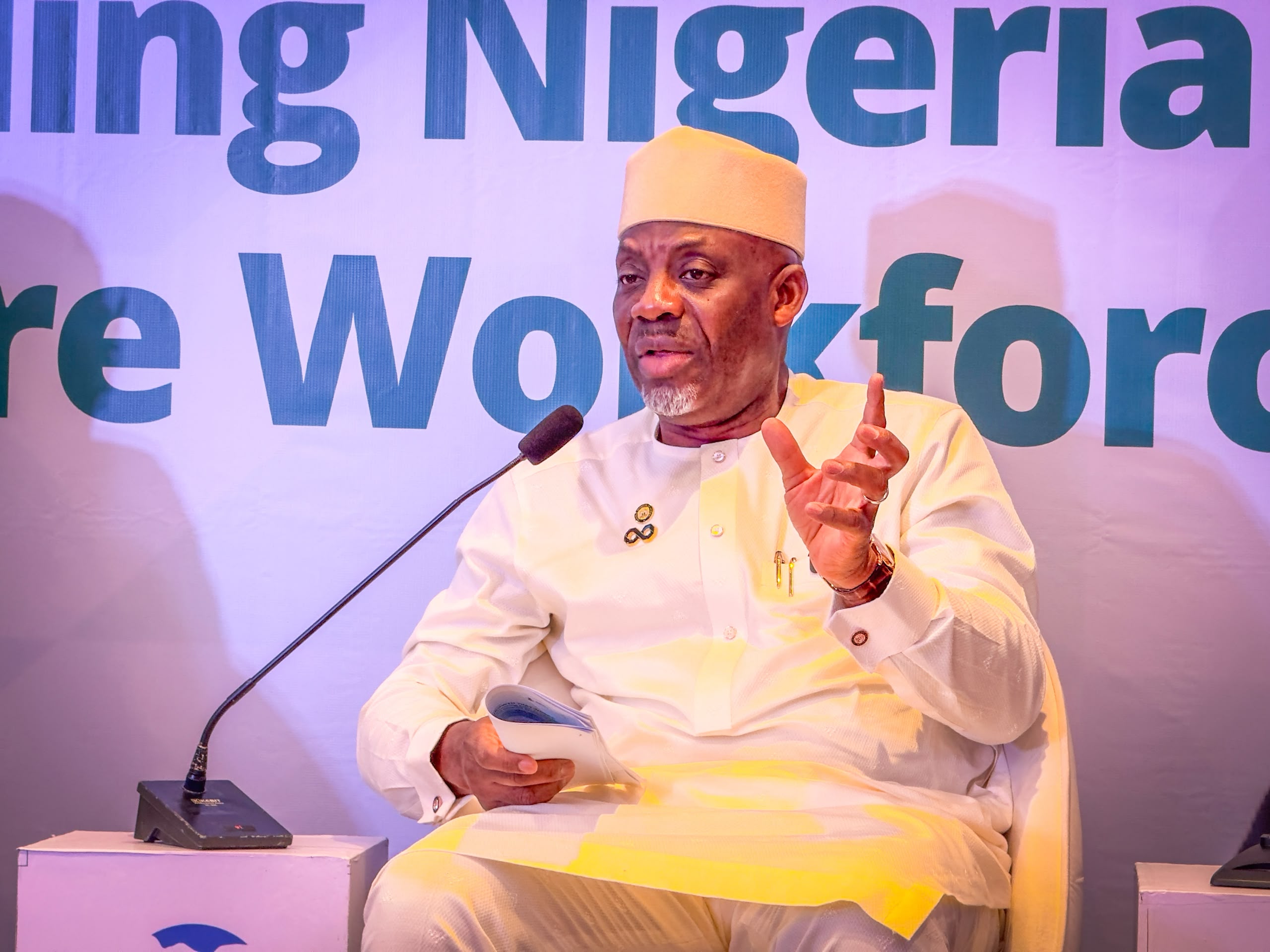
Nearly 250,000 Nigerians Enrolled in FG’s Vocational Skills Programme To Bridge Skills Gap- Alausa

The Federal Government has enrolled nearly 250,000 Nigerians in its Technical and Vocational Education and Training (TVET) programme as part of efforts to bridge the skills gap, improve employability and align education with labour market demands.
The Minister of Education, Dr Maruf Tunji Alausa, disclosed this at a panel session titled “Building Nigeria’s Future Workforce” at the 32nd Nigerian Economic Summit in Abuja, where he called for stronger partnerships between government, educational institutions and employers to translate learning into jobs and economic growth.
Alausa said the programme operates through more than 1,200 accredited training centres and production hubs nationwide, adding that the initiative was designed to equip Nigerians with practical skills relevant to employers, businesses and emerging industries.
According to him, the government streamlined the previous 82 training areas to 28 market relevant trades following a labour market and skills gap analysis.
He explained that about 80 per cent of the training focuses on practical, hands on learning, while the remaining 20 per cent is devoted to theory.
Eligible trainees receive a monthly stipend of ₦30,000, while participating training centres receive ₦50,000 per learner monthly to support training delivery. The minister also said tuition at federal technical colleges remained free.
Alausa disclosed that the TVET initiative attracted approximately 1.4 million applications within two weeks of the latest application portal opening, describing the response as an indication of demand for accessible vocational training among young Nigerians.
He stressed that the country’s future workforce must be built on market relevant skills rather than academic certificates alone, arguing that education reforms should prepare graduates for employment, self employment and entrepreneurship.
The minister identified curriculum modernisation as another major component of the reforms, noting that the revised national curriculum took effect from the 2025/2026 academic session.
He said the curriculum changes include a reduction in the number of subjects at the senior secondary level, alongside the introduction of Digital Technologies and trade subjects to strengthen digital literacy and practical competencies.
On the use of technology in education, Alausa said the ministry was promoting artificial intelligence tools to support teachers in lesson planning and assessment. He, however, stressed the need to ensure that such tools do not undermine children’s cognitive development at the primary school level.
The minister also highlighted the role of the Nigerian Education Loan Fund (NELFUND) in expanding access to tertiary education, disclosing that the fund had disbursed ₦372.62 billion to students and participating institutions as of September 29, 2026.
He added that the ministry was working with the National Universities Commission and other stakeholders to encourage universities to introduce and strengthen courses that reflect changing industry needs.
Beyond formal qualifications, Alausa said the government was promoting entrepreneurship education to enable graduates to establish businesses and create employment opportunities.
He disclosed that the Entrepreneurial Innovation and Business Incubation Certification programme was being piloted in 14 universities, with plans to expand it to more universities from the next academic session.
The minister called on industry stakeholders to participate actively in defining occupational standards, developing curricula, assessing practical competencies and providing workplace training opportunities.
He said the impact of education reforms should be measured not only by enrolment and graduation figures but also by graduates’ ability to secure jobs, establish viable businesses, improve their earnings and contribute to national productivity.
The panel discussion was part of the 32nd Nigerian Economic Summit, organised by the Nigerian Economic Summit Group under the theme, “Growth That Works”. The summit brings together public and private sector leaders to discuss strategies for improving economic performance, productivity and shared prosperity.
Alausa reaffirmed the ministry’s commitment to an education system that connects learning with the productive economy and equips Nigerian youths to compete in an increasingly technology driven and skills based global labour market.

