

Nigeria has called for a new framework of engagement between Africa and global partners based on sovereignty, strategic autonomy, domestic resource mobilisation and investment in bankable infrastructure projects.
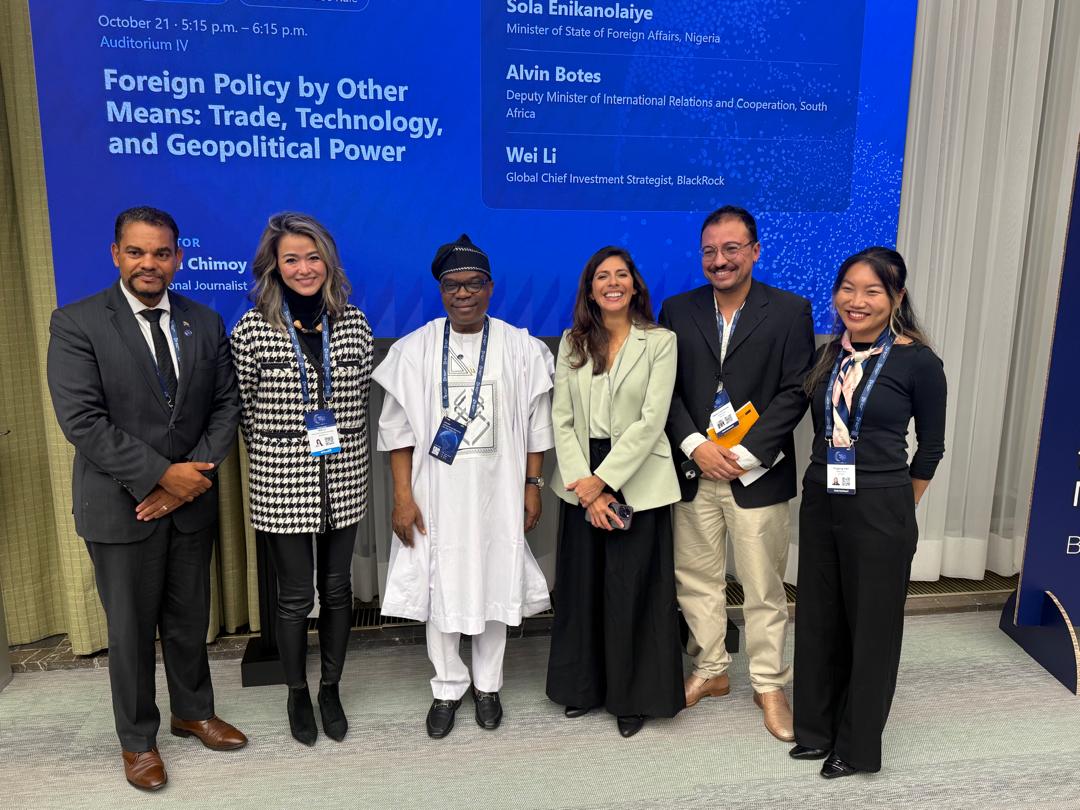
Minister of State for Foreign Affairs, Ambassador Sola Enikanolaiye, made the call while speaking at the Berlin Global Dialogue 2026 during a high-level panel on trade, technology and geopolitical power, as well as a policy laboratory on infrastructure and investment.
Enikanolaiye said Africa’s engagement with the rest of the world should be founded on mutual respect, commitment to African priorities and shared prosperity.
“Africa has come to this conversation with great assets, substantial opportunities and a determination to shape its own development based on partnership with the rest of the world,” he said.
The minister noted a shift in diplomacy from rigid political alliances to more pragmatic and transaction-focused engagements, adding that African countries must increasingly define their development priorities and partnerships on their own terms.
Addressing the relationship between foreign policy and business, Enikanolaiye said Africa’s continued marginalisation in the global economy underscored the need for stronger domestic resource mobilisation.
Citing the success of a public offer by the Dangote Group that attracted subscriptions from more than 52 countries, he argued that foreign investment should complement, rather than replace, domestic sources of capital.
“Foreign capital can only complement but cannot replace the kind of resources that we need,” he said.
On global geopolitical competition, the minister reaffirmed Nigeria’s commitment to a doctrine of Strategic Autonomy, describing it as a policy that enables the country to pursue its national interests irrespective of ideological divisions among major global powers.
Enikanolaiye also called for an end to what he described as the extractive model of economic engagement with Africa, insisting that investors in Nigeria’s mining sector should establish local processing industries instead of exporting raw minerals.
He said government policies now place greater emphasis on local value addition, environmental protection and safeguarding host communities.
Speaking on infrastructure development, the minister identified electricity, transportation and digital connectivity as critical requirements for economic expansion and job creation across Africa.
He said attracting investment into infrastructure would depend on bankable projects supported by predictable regulations, transparent procurement processes and credible risk-sharing arrangements.
According to him, African institutions such as Afreximbank, the African Development Bank, the ECOWAS Bank for Investment and Development and the newly established African Credit Rating Agency have important roles to play in providing guarantees and blended financing.
On regional integration, Enikanolaiye highlighted Africa’s average economic growth rate of 4.3 per cent and the continent’s aspiration to reach 7 per cent growth.
He also cited progress on the Pan-African Payment and Settlement System (PAPSS), the proposed ECO currency and Nigeria’s single-window trade system as measures expected to increase intra-African trade under the African Continental Free Trade Area (AfCFTA).
The minister also advocated reforms to the international credit rating system and welcomed the establishment of the African Credit Rating Agency, arguing that African economies should be assessed more fairly.
He further emphasised the importance of human capital development, curriculum reforms in technical education, mobilisation of diaspora remittances and improvements in Nigeria’s business environment.
Enikanolaiye reaffirmed Nigeria’s commitment to fiscal discipline, transparency, democratic governance and the rule of law, while calling for greater mobilisation of long-term capital to support Africa’s development agenda.
On the sidelines of the dialogue, the Nigerian delegation, which included Minister of Budget and Economic Planning Abubakar Atiku Bagudu, held engagements at Nigeria House in Berlin on behalf of President Bola Ahmed Tinubu.
The minister also met with Lesotho’s Foreign Minister, Limpho Justice Tau, to discuss stronger bilateral cooperation and the possibility of establishing a physical diplomatic presence for Lesotho in Abuja.
Tau invited Nigerian investors, including the Dangote Group, to explore investment opportunities in Lesotho.

