

BRICS leaders have reaffirmed their commitment to resolving global conflicts through dialogue, diplomacy and adherence to international law, with the New Delhi Declaration emerging as a consensus document that reflects the grouping’s shared position on major geopolitical challenges despite the diversity of its membership.
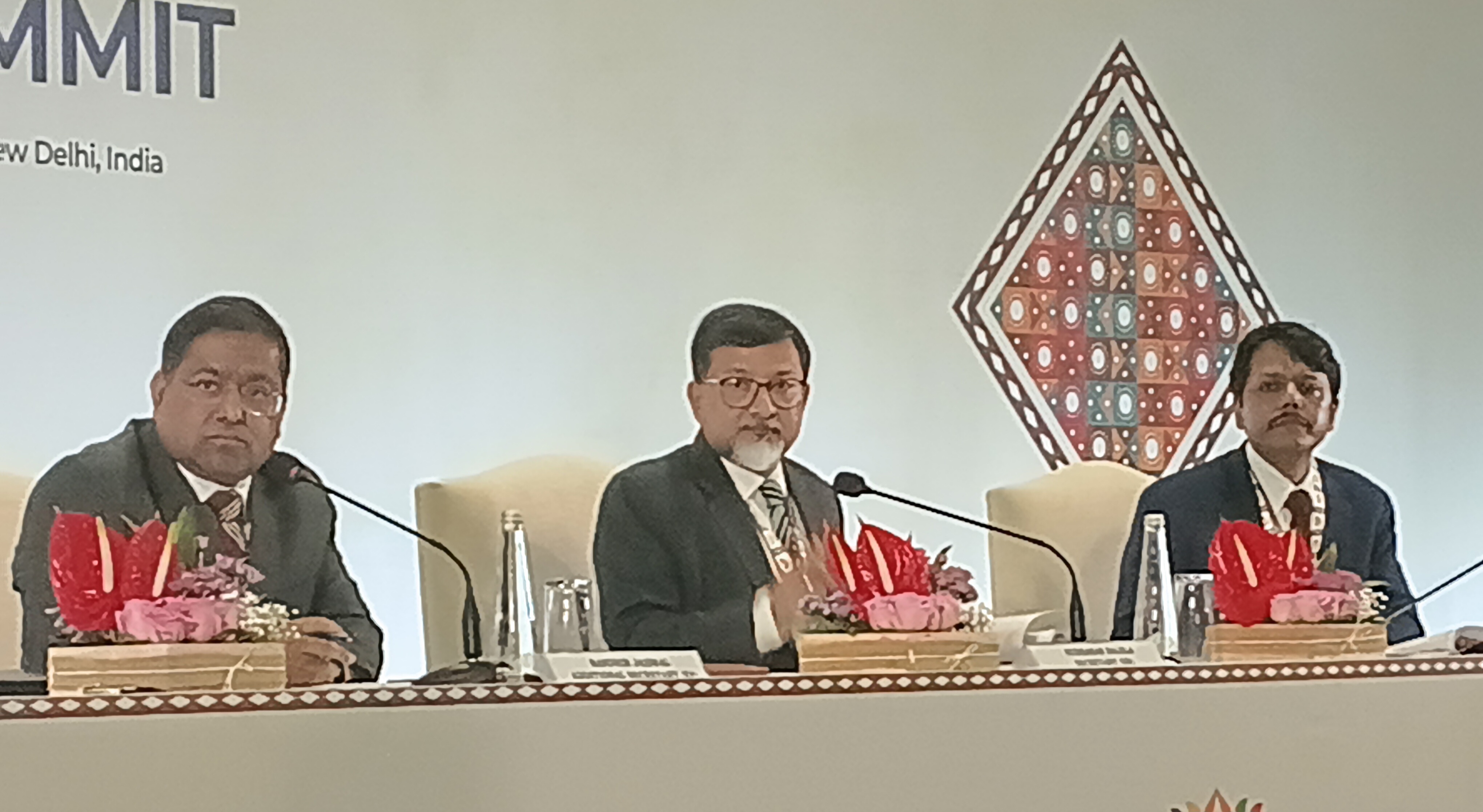
Briefing the media after the BRICS Summit, Secretary (Economic Relations) and India’s BRICS Chair, Shri Sudhakar Dalela, said member countries agreed that peaceful settlement of disputes, respect for the UN Charter and diplomatic engagement must remain the guiding principles for addressing international tensions and conflicts.
“BRICS has very clearly articulated its preference for dialogue and diplomacy as a guiding parameter for addressing tension and conflict,” Dalela said, noting that the position was reflected in multiple provisions of the New Delhi Declaration.
While refraining from commenting on specific geopolitical disputes, he said the grouping had reached consensus on issues relating to West Asia and agreed that lasting peace, security and stability could only be achieved through dialogue and diplomatic engagement.
Dalela said India’s chairship had provided a transparent and objective platform for member countries to present their national perspectives and discuss differences candidly.
“In a grouping like BRICS, where members have diverse development experiences and economic systems, it is important that discussions evolve through dialogue and consensus-building,” he said.
He described the declaration as the product of extensive consultations and a reflection of the common ground identified by all members across the bloc’s political and security agenda.
The official said the ability to arrive at agreed positions on sensitive global issues demonstrated BRICS’ capacity to bridge differences and build consensus among countries with varied interests and priorities.
Beyond geopolitical issues, the summit also reaffirmed BRICS’ commitment to reforming global governance institutions, particularly the United Nations and the UN Security Council.
Dalela drew attention to the New Delhi Declaration’s support for a stronger role for emerging and developing countries in international affairs, including countries from Africa, Asia and Latin America.
The declaration recognises the legitimate aspirations of African countries in the context of UN reform and reiterates earlier BRICS positions supporting a greater role for India and Brazil in the United Nations, including the Security Council.
On expansion of the grouping, Dalela said Egypt, despite being a relatively new member, had participated actively in BRICS processes and had strongly supported India’s chairship priorities.
He said Egypt had contributed constructively to consensus-building efforts across sectors and was expected to play an increasingly important role in future BRICS cooperation.
A significant outcome of the summit was the continued emphasis on development-oriented cooperation. Dalela stressed that India’s chairship had deliberately prioritised issues with a direct impact on people’s lives, including trade, investment, agriculture, healthcare, technology and innovation.
He said the New Delhi Declaration and an accompanying fact sheet reflected more than 50 practical outcomes achieved under India’s chairship in areas such as resilience, innovation, cooperation and sustainability.
According to Dalela, development cooperation remains central to BRICS’ engagement with the Global South, with members sharing experiences and best practices to address common challenges and accelerate inclusive growth.
The summit also strongly condemned the terrorist attack in Jammu and Kashmir that took place last year, reaffirming BRICS’ opposition to terrorism.
Reflecting on India’s year as BRICS chair, Dalela said the country had organised more than 350 meetings across its 22 ministerial tracks and working groups, covering virtually every major sector of cooperation.
He said the chairship had been marked by broad participation from central and state governments, industry, academia, youth groups, civil society organisations and local communities through events held in more than 30 cities across India.
Describing India’s tenure as a “people-centric chairship”, Dalela highlighted initiatives such as the BRICS Solidarity Run, BRICS Film Festival, BRICS Youth Summit and the ongoing BRICS Artisan Bazaar, which sought to deepen people-to-people engagement among member countries.
India also used the chairship to showcase its experience in digital public infrastructure, innovation, entrepreneurship, disaster resilience and traditional knowledge systems, he said.
“The true measure of a chairship is not simply the number of meetings held, but the quality of participation, the ability to build consensus and the outcomes achieved,” Dalela said.
He added that the New Delhi Declaration and the practical outcomes achieved during the year had laid a strong foundation for the next phase of BRICS cooperation.
Concluding the briefing, Dalela thanked BRICS members and partner countries for their constructive engagement throughout India’s chairship, describing the New Delhi Declaration as a manifestation of partnership, unity, solidarity and consensus-building within the grouping while reaffirming BRICS’ commitment to peace, development and a more representative global order.

