


The Independent National Electoral Commission (INEC) Chairman, Prof. Joash Amupitan, SAN, has ordered a review of Continuous Voter Registration (CVR) records in the South-East and the removal of bottlenecks hindering the distribution of Permanent Voter Cards (PVCs) ahead of the 2027 general election.
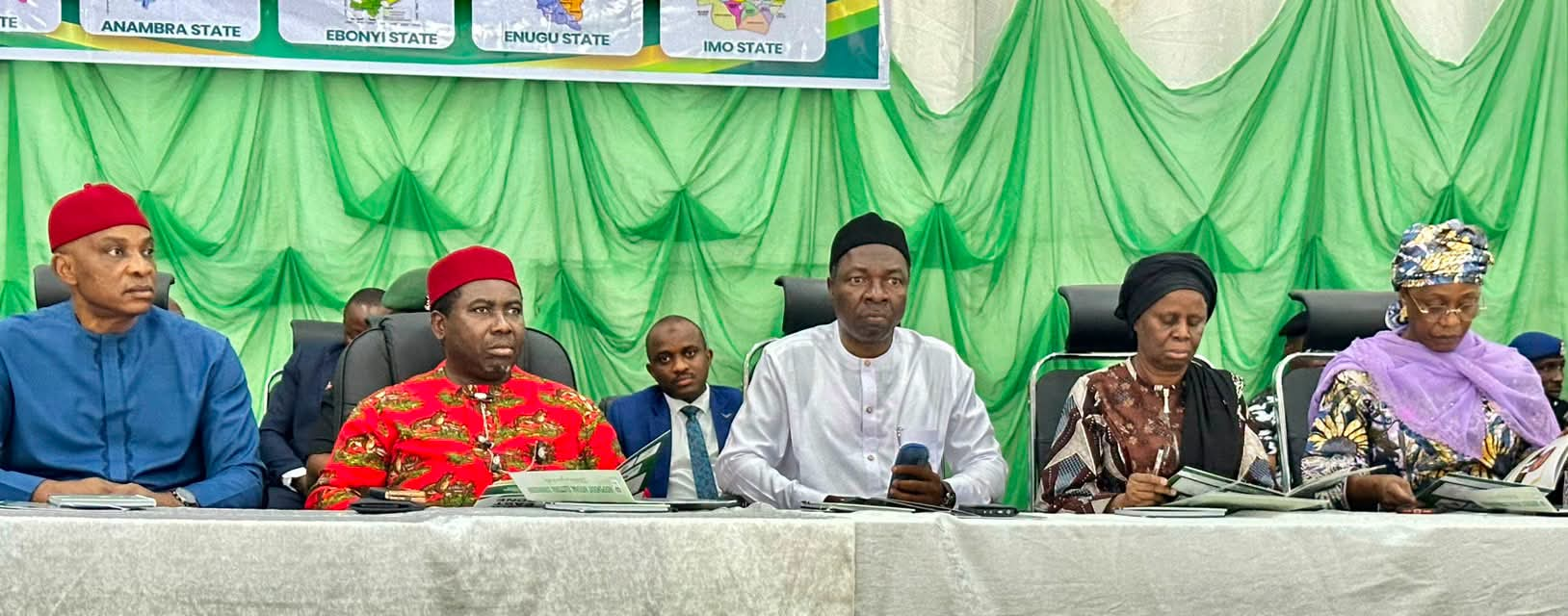
Amupitan gave the directive on Tuesday in Enugu during the Commission’s South-East Zonal Interactive Meeting with Staff and Readiness Assessment for the 2027 general election.
He said the Commission’s immediate operational priority in the zone was to identify gaps in voter registration records and address administrative and logistical challenges preventing eligible voters from obtaining their PVCs.
“Our objective is uncompromising: no eligible citizen who registered should be disenfranchised by administrative or logistical friction,” the INEC chairman said.
The directive comes as the Commission intensifies preparations for the 2027 elections, with the National Register of Voters standing at more than 103 million, according to Amupitan.
The chairman disclosed that the three phases of the CVR exercise conducted under Section 10 of the Electoral Act 2026 recorded a combined 10,772,421 new registrants, subject to final verification and deduplication through the Automated Biometric Identification System (ABIS) at the Commission’s national headquarters.
According to him, the first phase, conducted from August 25 to December 10, 2025, recorded 2,611,266 registrants, while the second phase, which ran from January 5 to April 17, 2026, recorded 4,121,835.
The third phase, held between May 11 and July 26, 2026, added 3,867,997 registrants.
Amupitan said INEC introduced an online registration portal during the third phase to reduce barriers associated with distance and time.
He also disclosed that the Commission had activated printable PVC technology in line with Section 18(1) of the Electoral Act 2026, an innovation intended to reduce delays in the collection of voter cards.
Amupitan reminded staff that the Presidential and National Assembly elections would hold on Saturday, January 16, 2027, while the Governorship and State Houses of Assembly elections were scheduled for Saturday, February 6, 2027.
He said the elections would involve more than 103 million registered voters and 176,846 polling units across the 36 states and the Federal Capital Territory.
“The statutory timeline is fixed, and the clock is ticking,” he said, adding that nine of the 14 major statutory milestones in the revised timetable and schedule of activities had been completed.
The Enugu meeting was the third stop on INEC’s nationwide readiness assessment tour, following engagements in Lagos on September 7 and Kaduna on September 28, 2026.
Amupitan said his visit to the South-East was intended to strengthen direct engagement with field personnel and assess operational challenges ahead of the elections.
He noted that election delivery depended heavily on personnel working across the zone’s 95 local government areas, registration area centres and polling units.
The chairman identified declining public trust, voter apathy, misinformation and disinformation as significant challenges facing the Commission.
He warned that fabricated reports, unverified rumours and deepfake videos could spread rapidly and undermine public confidence in the electoral process.
According to him, INEC’s response would centre on proactive transparency, timely official communication and strict operational standards at polling units.
He also commended staff for their roles in recent off-cycle governorship elections in Osun, Anambra and Ekiti states, as well as Federal Capital Territory Area Council elections and 16 federal and state bye-elections.
However, he cautioned that previous successes would raise public expectations for the 2027 general election.
On election security, Amupitan said INEC had strengthened its partnership with the Inter-Agency Consultative Committee on Election Security (ICCES) and was working with security agencies at national and state levels to develop an intelligence driven security framework.
He disclosed that the Commission had identified potential threats to ad hoc election personnel, particularly members of the National Youth Service Corps (NYSC).
According to him, intelligence provided by the Department of State Services (DSS) led to the identification and arrest of individuals allegedly connected to the plot. He said the suspects would be prosecuted.
The chairman also announced plans to convene a security conference to address additional concerns relating to election security.
Amupitan warned that partisan conduct, administrative negligence, extortion and ethical breaches would not be tolerated under his leadership.
He reminded electoral officials and other personnel of their obligations under Section 26 of the Electoral Act 2026, including the requirement for relevant officials to swear an oath of loyalty and neutrality.
He said the Commission was refining its Result Management Systems, including the newly introduced eEC8A electronic verification platform, to improve the transparency and traceability of election results through the INEC Result Viewing Portal (IReV).
On logistics, he said new operational pickup vehicles had been procured and dispatched to state offices and local government areas nationwide. He also announced the establishment of the Electoral Logistics Committee, chaired by retired Rear Admiral Jamila Malafa.
The Commission, he added, was combining physical training with information and communications technology tools to prepare permanent and ad hoc personnel for their responsibilities.
The chairman said INEC had introduced the Consolidated Election Management Body Salary Structure (CEMBSS), moving its workforce out of the regular Civil Service structure with effect from January 1, 2026.
He added that a new salary and welfare package for staff, Commission members and Resident Electoral Commissioners was at an advanced stage of implementation.
Monthly overhead allocations to state offices, he said, had also been increased by 150 per cent with effect from July 1, 2026.
Amupitan urged electoral officials to familiarise themselves with the law, remain impartial, document their actions and protect the integrity of the electoral process.
“To the voter in a rural ward or an urban centre, INEC is not the Chairman in Abuja; INEC is you,” he said.
He expressed confidence that the Commission would deliver the 2027 general election successfully, urging staff to uphold neutrality, integrity and operational excellence.
The meeting was attended by INEC National Commissioners, Resident Electoral Commissioners from South-East states, the Acting Director-General of The Electoral Institute, directors from the national headquarters, administrative secretaries, technical aides, electoral officers, heads of department, security officials and members of the media.

