

Media scholar and public affairs analyst Dr Austin Maho has urged Nigerian journalists and diplomatic correspondents to critically evaluate and contextualize international development models, arguing that lessons from China’s poverty reduction efforts could inform policy discussions in Nigeria if adapted to local realities.
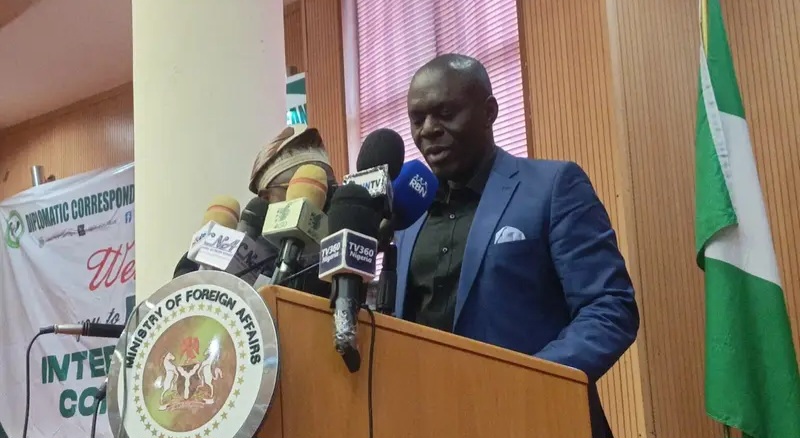
Speaking at a workshop organised by the Diplomatic Correspondents’ Association of Nigeria (DICAN) on Nigeria’s poverty alleviation efforts and China’s development model, Dr Austin Maho said China’s experience in lifting millions out of poverty demonstrates the importance of leadership, data-driven planning and long-term policy commitment.
Drawing from his participation in a July 2026 conference in Yinchuan, Ningxia Province, China, attended by policymakers and scholars from the Global South, Maho said the central question was how China lifted hundreds of millions of people out of absolute poverty and what other countries could learn from the experience.
According to the presentation, China’s poverty reduction strategy combined strong political leadership, targeted interventions, extensive data collection and multi-level government coordination. Maho noted that China moved nearly 99 million people out of poverty between 2012 and 2020 and connected more than 100,000 villages with paved roads as part of the effort.
However, he cautioned against attempts to directly replicate the Chinese model in Nigeria, citing significant differences in governance structures, economic systems and state capacity.
He said Nigeria faces challenges including weak data infrastructure, lower administrative capacity and security concerns that could complicate implementation of similar programmes.
Maho described Nigeria’s demographic growth as a major development challenge, noting that the country records millions of births annually while continuing to grapple with poverty, unemployment and pressure on public services. He argued that poverty reduction should be treated as a national priority with measurable outcomes.
The media practitioner stressed that diplomatic correspondents should serve as “translators and accountability agents” by examining the effectiveness of foreign-backed development initiatives and assessing whether they align with Nigeria’s development objectives.
He called on journalists to move beyond reporting official announcements and instead track the implementation and impact of projects in areas such as agriculture, infrastructure, digital education and rural development.
Among his recommendations, Maho urged media organisations to create dedicated development diplomacy beats, strengthen data journalism, fact-check international partnerships and develop scorecards to monitor poverty-related indicators at state and local government levels.
He warned that failure to properly contextualize international development models could lead to either uncritical promotion of foreign experiences or blanket rejection of potentially useful lessons.
The media, he said, has a responsibility to help citizens understand development policies and hold public officials accountable for results.
Maho concluded that while China’s experience offers valuable insights, Nigeria must develop solutions suited to its own federal, democratic and socio-economic realities, with the media playing a central role in informing public debate and shaping accountability.

