

The Nigeria Export Processing Zones (NEPZA) has diligently worked to accomplish its mandate to accelerate industrialisation, significantly contributing to the country’s economic growth through a wide range of highly incentivized free trade zones.
A free trade zone is a specific area within a country where trade and business laws differ from those of the rest of the country. The country has 63 of them, with 900-plus enterprises operating, totalling about 40 billion dollars.
The scheme provides benefits such as tax incentives and simplified regulations to attract foreign investment, create backward linkages, generate employment, transfer skills, earn foreign exchange, develop infrastructure, and boost economic growth.
Over the 30-year history of the scheme, successive leaders of the Authority remained committed to its core mandate: regulating the ecosystem that facilitates the import, storage, handling, manufacturing, or reconfiguration of goods, which are then re-exported under specific customs rules and duties, thereby generating substantial revenue for the federation.
However, upon assuming office as the Managing Director/CEO of the Authority three years ago, Dr. Olufemi Ogunyemi considered it expedient to adopt a system that now provides broader economic benefits, such as using the zones to strengthen local industries, foster innovation, share knowledge, and enable technological spillovers through the scheme’s digitization evolution across the ecosystem.
This initiative has ignited growing worldwide interest in zone-based development, with the MAG Free Zone Management Company making a significant move to fast-track growth in the Federal Capital Territory (FCT) through its Walk City project at the Abuja Technology Village Free Trade Zone.
The $1.5 billion, 200–250-hectare mixed-use mega-free zone project along Airport Road in Lube, Abuja, aims to establish a Dubai-inspired urban district emphasising beauty, stylish living, recreation, and entertainment.
Phase one of the zone, developed by MG International Links Limited under a July 2025 MoU with the FCT Administration, includes luxury apartments, grade A offices, a 450-meter tower, and an entertainment arena that can host over 20,000 spectators.
The ecosystem will create a modern, pedestrian-friendly, and sustainable “live, work, shop” environment to revitalise Abuja’s tourism and commercial corridors.
The multi-purpose zone, whose development would culminate within nine years in a university and a massive commercial hub, aims to transform the previously underused Abuja Technology Village site into a vibrant urban hub that attracts international companies, scholars, and researchers while enhancing the city’s infrastructure.
Dr. Ogunyemi has described the zone as a multi-billion-naira enclave that will serve as a social and economic gateway for the country’s foreign investment drives.
The NEPZA Chief Executive Officer also expressed delight at the steps taken by the FCT Minister, His Excellency, Nyesom Wike, to expand the FCT’s economic frontier through the City Walk project.
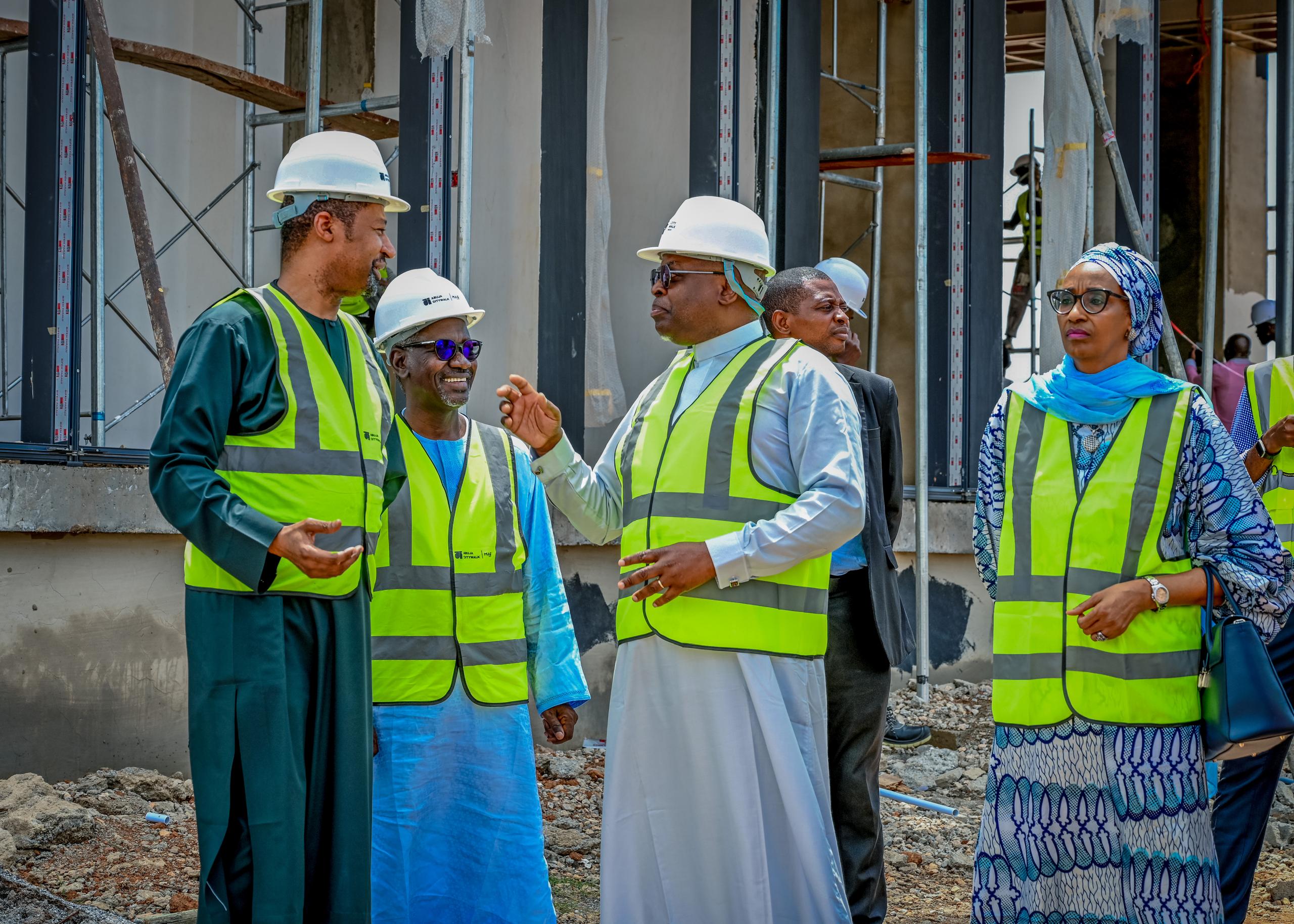
Dr. Ogunyemi made the remarks on Tuesday during an inspection visit to the project site.
Dr. Ogunyemi further stated that the Authority’s continued support for the project’s realisation and the scheme’s progress across all development frontiers would be sustained.
He, however, cautioned about a potential decline in the initiative, urging the promoters to carefully refine the policies and agreements essential to the project’s successful completion.
“The Authority has often faced challenges in monitoring due to zones not maintaining records of their corporate social responsibility to host communities. This zone can improve this perception by establishing accurate records from the outset. It is essential to care for and restore the host communities to promote peaceful coexistence,’’ Dr Ogunyemi stated.
On his part, Dr. Kashim Gidado, Chief of Staff to the Chairman of the MAG-FZC, owner of the enterprise, expressed delight at having been registered and licensed as a free trade zone entity, adding that the benefits were already evident in the form of duty-free importation of materials and heavy machinery for the project.
Gidado said the multi-billion-naira investment was, however, informed by love for the country and the desire to bring the FCT closer to the global community profitably.
According to him, the City Walk is modelled on the Dubai City Walk, an iconic destination that will elevate the FCT’s status as a true capital city for leisure and business.
“Phase one of the zone is scheduled for completion by May, with commissioning aimed at President Bola Tinubu, GCFR, on May 29. We credit this achievement to the supportive government,’’ Gidado said.
Abuja was designated Nigeria’s capital on December 12, 1991. Located in the heart of the Federal Capital Territory (FCT), it replaced Lagos, the most populous coastal city, as part of a broader effort to enhance national unity and promote more equitable regional growth.
Like other capital relocations, Nigeria moved its capital for strategic reasons, establishing Abuja as the new administrative hub, commonly referred to as “the centre of unity.”
Originally conceived as a planned city guided by a master plan created by the US-based consortium International Planning Associates (IPA), the concept has evolved over more than thirty years.
The latest master plan, called “City Walk,” was developed by MAG International Links Limited and designed by Benoy. It envisions a mixed-use district covering 250 hectares, incorporating hotels, offices, residences, retail outlets, cultural and educational institutions, healthcare facilities, a 450-meter tower, and a 13,000-seat indoor arena.
Phase One, currently underway, is expected to deliver approximately 245,000 square meters of built space across nearly 185,000 square meters of land, comprising a diverse program that includes residential typologies, cultural venues, retail, offices, hospitality, education, and healthcare facilities.
The scheme includes notable landmarks such as Africa’s tallest tower at 450 meters and Nigeria’s largest indoor arena, with a capacity of nearly 20,000.
A core element of the proposal is the “Sponge District” concept, in which landscape infrastructure serves an important environmental function by using green corridors to control stormwater, boost biodiversity, and provide accessible public spaces.
This was exactly the reason for adopting free trade in 1992, to fast-track industrialization and meaningful development for citizens, as evidenced by NEPZA’s past ventures, including the Eko Atlantic and Alaro City free trade zones in Lagos.
No wonder the FCT minister recently echoed the president’s desire to leverage the free trade scheme to attract foreign partnerships to transform Abuja and other major cities into tourist and production destinations.
“We must fulfil Mr. President’s promises regarding industrialization, trade, and investment. In this context, the FCT will continue to collaborate with NEPZA to review the future of the Abuja Technology Village, a free trade zone that was sponsored and supported by the FCT administration. Our focus is to revamp the city in line with the president’s directive.
“The City Walk Abuja shall be a high-tech, smart city with inherent, globally recognized, competitive values that would give this administration’s Renewed Hope Agenda true meaning in the North-Central Region of the country, “ the minister said.
Clearly, this NEPZA management, headed by Dr. Ogunyemi, a shrewd strategist with sharp attention to detail, remains a rare visionary, consistently working to fulfil the Authority’s mandate sustainably, as demonstrated by initiatives such as the City Walk project.
Martins Odeh, Ph.D., (AD), Head Corporate Communications, NEPZA.

