


By Paul Nwachukwu
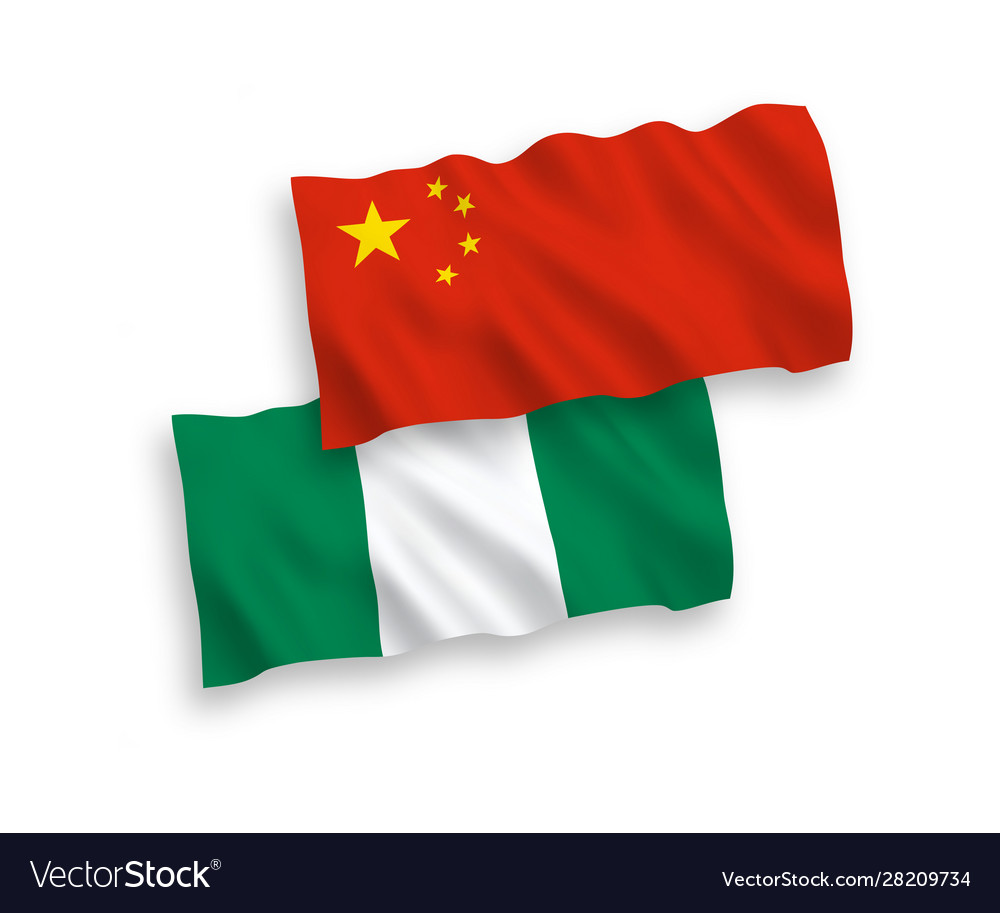
In a world grappling with democratic fatigue and institutional distrust, China’s Eight-Point Decision on Improving Party and Government Conduct—known simply as the Eight Rules—offers a compelling model of internal reform. While the initiative was crafted for China’s unique political context, its core principles—discipline, frugality, and proximity to the people—resonate far beyond its borders. For Nigeria, a country with its own ambitious reform agenda, the Eight Rules offer not just inspiration, but a mirror.
Introduced on December 4, 2012, by the Political Bureau of the Communist Party of China (CPC), the Eight Rules were designed to curb bureaucratic excess, reconnect officials with the grassroots, and restore public trust in governance. Over a decade later, their influence is being felt not just within China’s borders, but across the developing world, where governments are watching—and in some cases, emulating—China’s approach to political discipline and administrative efficiency.
What Are the Eight Rules?
The Eight Rules target key areas of official conduct:
Streamlining meetings and documents to reduce waste and improve clarity.
Improving grassroots research to ensure policies reflect real conditions.
Standardizing overseas visits to prevent extravagance.
Reforming news coverage and publication practices to promote transparency.
Enhancing security protocols while maintaining public accessibility.
Promoting frugality and anti-corruption as core values of governance.
President Xi Jinping famously declared, “I will start with myself,” signaling a top-down commitment to reform. The Eight Rules were not presented as lofty ideals, but as minimum standards—a baseline for Party members to reconnect with the people and restore credibility.
A Culture of Restraint
The Eight Rules are deceptively simple. They call for shorter meetings, fewer empty slogans, modest travel arrangements, and more time spent engaging with ordinary citizens. They demand frugality, discipline, and humility from public officials. In essence, they are a rejection of the entitlement and extravagance that often plague political elites.
President Xi Jinping’s declaration—“I will start with myself”—was not just symbolic. It signaled a top-down commitment to change, one that has since reshaped the behavior of millions of Party members. The result? A political culture that prizes efficiency over spectacle, and service over status.
Nigeria’s Reform Blueprint
Nigeria has not been idle in its pursuit of better governance. The National Strategy for Public Service Reform (NSPSR), revised in 2023, outlines a comprehensive framework for improving service delivery, strengthening leadership, and enhancing accountability across Ministries, Departments, and Agencies. It emphasizes decentralization, rapid capacity building, and robust monitoring—principles that echo the spirit of China’s Eight Rules.
Additionally, platforms like the Aig-Imoukhuede Foundation’s National Workshop on Public Sector Reform have spotlighted the challenges of implementation, including patronage, fragmentation, and weak institutional culture. The workshop’s introduction of the “Multiple Fiefdoms Theory” underscores the need for a unified, service-oriented public ethos—precisely what the Eight Rules aim to cultivate.
A Shared Governance Ethos
Both Nigeria and China are navigating complex reform terrains. While their political systems differ, their challenges—bureaucratic inefficiency, public distrust, and elite disconnect—are strikingly similar. And so are their solutions.
China’s Eight Rules and Nigeria’s NSPSR both prioritize:
Ethical leadership over entitlement.
Grassroots engagement over top-down detachment.
Performance and accountability over patronage and opacity.
These are not just administrative tweaks—they are cultural shifts. And in a world where governance is increasingly contested, such shifts may prove more transformative than any summit or treaty.
Toward a New Governance Compact
As Nigeria continues to refine its public service, it would do well to draw lessons from China’s quiet revolution. Not to replicate its system, but to embrace its discipline. Not to adopt its ideology, but to internalize its ethos: that governance begins not with grand speeches, but with small, consistent acts of restraint and responsibility.
In the end, the Eight Rules are more than a Chinese policy—they are a global provocation. They ask every nation, including Nigeria, to reconsider what responsible leadership truly looks like. And in today’s noisy world, that may be the most radical idea of all.
