

2027: INEC Voter Register Surges Above 103m, Unveils Measures To Curb Vote-Buying, Disinformation

The National Register of Voters has risen to more than 103 million ahead of the 2027 general elections following the completion of the Continuous Voter Registration (CVR) exercise, the Independent National Electoral Commission (INEC) has said.
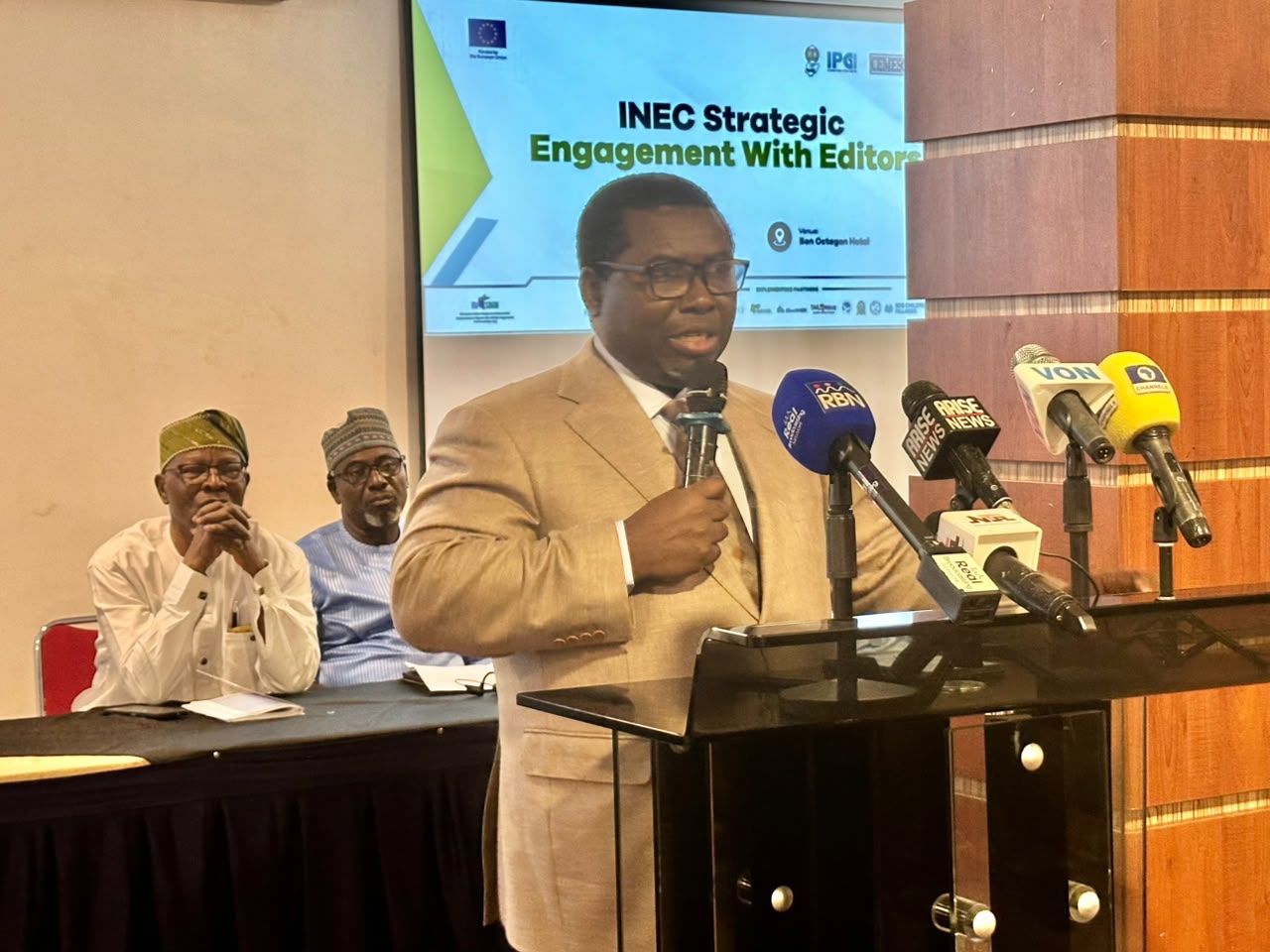
INEC Chairman, Prof. Joash Amupitan, disclosed this on Monday in Abuja while delivering a keynote address at a strategic workshop with media executives organised by the Nigerian Guild of Editors (NGE) in collaboration with the commission.
Amupitan said the three-phase CVR exercise attracted 10,772,421 new registrants, comprising 2,611,266 in the first phase, 4,121,835 in the second and 3,867,997 in the third phase.
He said the latest figure was subject to final verification, adding that the commission had completed the final cleanup of its Automated Biometric Identification System (ABIS).
“As you are aware, and in line with Section 10 of the Electoral Act 2026, the first phase of the Continuous Voter Registration (CVR) commenced on 25th August 2025 and ended on 10th December 2025, registering a total of 2,611,266 voters,” Amupitan said.
“Phase II commenced on 5th January 2026 and ended on 17th April 2026, registering 4,121,835 voters, while Phase III commenced on 11th May 2026 and ended on 26th July 2026, registering 3,867,997 voters.
“The total new registration stands at 10,772,421, subject to the Automated Biometric Identification System (ABIS) verification currently being concluded.”
According to the chairman, the commission has completed eight of the 14 major statutory activities contained in its timetable for the 2027 elections, describing the preparations as having entered the “amber zone” as the countdown intensifies.
He said the preliminary display of the voter register for claims and objections would take place nationwide from October 9 to 15, 2026.
Amupitan also announced that nationwide collection of Permanent Voters’ Cards (PVCs) would begin on Friday, October 9, with newly produced cards distributed to Local Government Area collection centres.
He said INEC had introduced printable PVC technology to reduce delays associated with the production and collection of voters’ cards and ensure that eligible voters were not disenfranchised, particularly in cases involving lost or stolen cards.
The chairman said the commission had also strengthened its technological infrastructure ahead of the elections with the acquisition of 57,000 new Bimodal Voter Accreditation System (BVAS) machines.
He said INEC was improving existing electoral technologies rather than introducing untested systems shortly before the 2027 polls.
According to him, the upgraded BVAS, enhanced electronic result management system and other technologies are being deployed to ensure that every valid vote counts and is seen to count.
He said the commission had also introduced an enhanced eEC8A form to digitise and cryptographically authenticate polling unit results before their upload to the INEC Result Viewing (IReV) portal.
Amupitan added that INEC was deploying artificial intelligence-driven systems to detect anomalies in database traffic and strengthen cybersecurity around the electoral process.
On vote-buying and illegal campaign financing, the INEC chairman said the commission was working with the Economic and Financial Crimes Commission (EFCC), Independent Corrupt Practices and Other Related Offences Commission (ICPC) and the Nigerian Financial Intelligence Unit (NFIU) to monitor campaign spending.
He said a joint financial monitoring mechanism would track suspicious and illegal campaign expenditure, while surveillance would be strengthened around polling units.
Amupitan warned politicians and their agents that violations of the Electoral Act would attract arrest and prosecution.
“Elections must be decided by the conviction of the voter, not the depth of a candidate’s pocket,” he said.
He also raised concerns over the growing use of social media to spread false information capable of undermining elections, describing malicious disinformation as “citizenship terrorism through social media.”
He urged editors and journalists to verify information before publication, warning that false reports could suppress voter turnout, create panic and ultimately delegitimise otherwise credible elections.
The chairman said INEC was particularly concerned about deepfakes, manipulated audio visual materials, coordinated fake news and premature declarations of unofficial results.
He cited a false report during the Federal Capital Territory elections alleging that members of the National Youth Service Corps had been killed, saying investigations later established that the report was untrue.
Amupitan urged newsrooms to take “a second, a minute” to verify information before publication, stressing that sensationalism should not be allowed to undermine the electoral process.
The chairman also warned against electoral violence, saying no political ambition was worth the loss of Nigerian lives.
He said INEC’s early warning mechanism under the Inter Consultative Committee on Election Security (ICCES) was monitoring political violence, thuggery and inflammatory rhetoric ahead of the polls.
He said the commission was also strengthening logistics and field operations, adding that readiness audits had been completed in the South-West and North-West geopolitical zones, with the remaining zones to follow.
The audits, he said, covered state offices, storage facilities, security protocols and logistics, while early procurement and distribution of non-sensitive materials had commenced.
On electoral personnel, Amupitan said all electoral officers and temporary staff would be required to take an oath of neutrality under Section 26 of the Electoral Act 2026.
He warned that the commission would maintain zero tolerance for partisanship, negligence and compromised ethical conduct by its personnel.
Earlier, President of the Nigerian Guild of Editors, Mr Eze Anaba, called for a credible and transparent electoral process that would ensure voters, rather than the courts, determine the outcome of elections.
Anaba said elections were not merely about casting ballots but about building citizens’ confidence that their votes would count and that institutions responsible for conducting elections would act fairly and professionally.
He expressed concern over the growing reliance on the courts to resolve election disputes, saying the electoral process should be strong enough to reflect the choices of voters.
“Elections are not merely about casting ballots. They are about trust. They are about citizens believing that their votes will count, that the process will be transparent, and the institutions responsible for conducting elections will act fairly and professionally,” he said.
Executive Director of the Centre for Media and Society, Akin Akingbulu, called for stronger verification mechanisms in newsrooms and greater transparency from INEC.
Akingbulu said verification was a two-way process, arguing that newsrooms could not properly verify information that institutions failed to disclose.
The Executive Director of the International Press Centre, Lanre Arogundade, also stressed the importance of timely and transparent communication from INEC, warning that information gaps created opportunities for speculation and misinformation.
INEC Chief Press Secretary to the Chairman, Adedayo Oketola, said editors were the chief gatekeepers of electoral information and that direct engagement with newsrooms had become a core priority for the commission.
He said the workshop was aimed at rebuilding institutional trust through open dialogue, combating information disorder through fact verification and promoting shared responsibility for credible elections.
In her goodwill message, INEC Director of Voter Education and Publicity, Mrs Victoria Eta-Messi, said the engagement would help align media leadership with the commission’s operational roadmap.
“We’re in the eye of the storm a lot of the times these days, and so it’s important that we are on the same page,” she said.
She added that disinformation and misinformation were undermining efforts to raise citizen participation and urged editors to disseminate timely and accurate information.

