
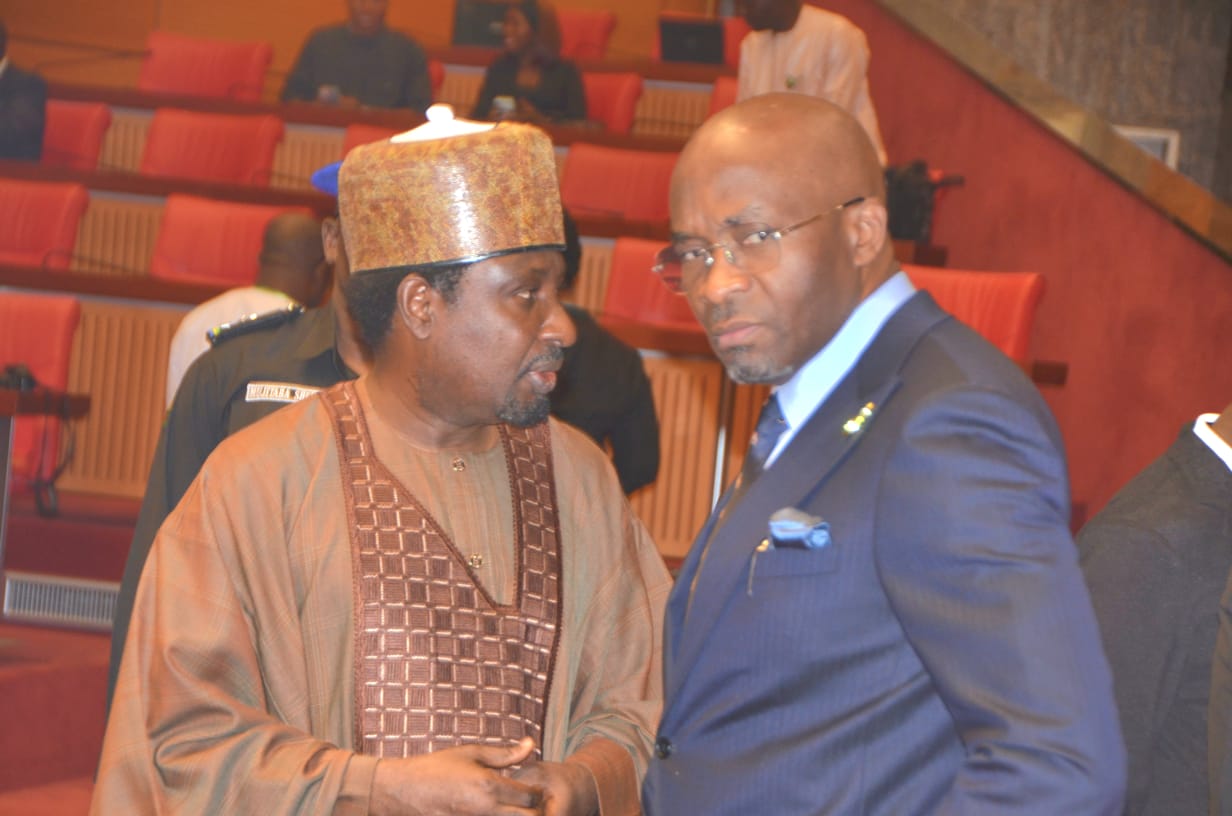


Deputy Speaker of the House of Representatives, Hon. Benjamin Kalu, has called for a strategic shift in how the ECOWAS region approaches economic integration, suggesting that digital payment platforms may be a more immediate solution than the long-delayed single currency.
Speaking at an ECOWAS Parliament seminar in Abuja, Kalu highlighted the stagnation of intra-regional trade, noting that while external trade is seeing growth, trade between member states remains at a “paltry” 11%. He attributed this lag to crumbling infrastructure, border delays, and excessive “red tape” that sees transporters waiting up to 14 hours for clearance.
Digital Innovation over Paper Currency
Addressing the long-standing debate over a unified ECOWAS currency, Kalu suggested that the region should move past disputes over the design and control of physical notes. Instead, he proposed adopting digital payment systems that allow for transactions in local denominations.
”What we could not do with paper notes… we can do through digital payment platforms,” Kalu stated.
He estimated that shifting away from dollar-denominated transactions could save the ECOWAS region approximately $5 billion in annual charges, while simultaneously strengthening local currencies.
The “Nearshoring” Solution to Inflation
When questioned on whether digital platforms are merely a way to sidestep the region’s high inflation rates, Kalu argued that the move would actually tackle the root causes of inflation by stimulating local production.
He criticized the current model of exporting raw materials and importing finished goods, advocating for a principle he termed “nearshoring.” This involves bringing capital and technology directly to African resource sites to facilitate industrialization.
Key examples of the proposed shift include:
- Cocoa to Chocolate: Transforming cocoa-producing regions into manufacturing hubs to trade finished products within the bloc.
- Lithium to Batteries: Developing battery factories to process African lithium locally rather than relying on imports from China or Europe.
Moving Beyond “Paper Diplomacy”
Kalu emphasized that the African Continental Free Trade Area (AfCFTA) agreement will remain “paper diplomacy” until the region fixes its infrastructure and payment systems.
”If we start trading with ourselves, productivity in Africa will increase,” Kalu concluded. “When these economic activities are stimulated, the ripple effect is that inflation goes down. It’s about reducing importation and encouraging production.”
