


The Federal Government has outlined a rigorous roadmap to transition Nigeria into a $1 trillion economy, asserting that the target is a “specific, measurable decision” rather than a mere political slogan.
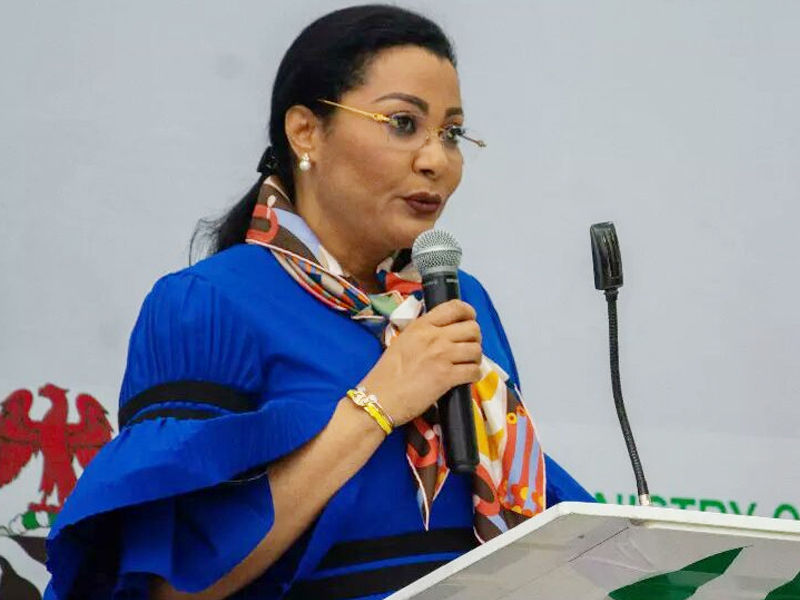
Speaking at the 2025 Financial Correspondents Association of Nigeria (FICAN) Annual General Meeting, the Minister of State for Finance, Doris Uzoka-Anite, revealed that achieving this milestone will require the nation to maintain a sustained GDP growth rate of between 10% and 12% annually over the next decade.
The Minister, who was represented by Uloma Amadi, Assistant Director of Media and Public Relations, noted that while the current GDP stands at approximately $275 billion, the administration is committed to the “ambitious targets that move nations.”
Restoring Market Integrity
Reflecting on the administration’s journey since 2023, the Minister highlighted the “politically difficult” but necessary decisions to remove the fuel subsidy—which previously consumed over $5 trillion annually—and unify the foreign exchange windows.
”Investors could not trust the signals our market was sending,” the Minister stated. “Today, those reforms are being vindicated. In January 2026, S&P Global revised Nigeria’s outlook to positive, affirming a high level of confidence in our fiscal and monetary trajectories.”
The “Second Wave”: DGAS Framework
The government is currently transitioning into a “second wave” of reform known as the Disinflation and Growth Acceleration Strategy (DGAS). This nine-pillar framework is designed to move Nigeria away from a consumption-based economy toward productive capacity.
Key pillars of the DGAS include:
Industrialization: Moving away from exporting raw materials (which currently account for 70% of inputs) to domestic processing, modeled after the success of the Dangote Refinery.
Infrastructure: Expanding broadband, data centers, and the Nationwide Energy Expansion Program (solar, hydro, and gas).
Human Capital: A pipeline targeting technical training for 3 million young Nigerians annually.
Consumer Credit: Launching a platform to make financing for housing, education, and healthcare accessible to ordinary citizens.
Global Re-entry and Compliance
The Minister also noted significant progress in international financial standing, highlighting Nigeria’s recent exit from the Financial Action Task Force (FATF) grey list.
”This matters because it directly reduces compliance costs for foreign investors,” the Minister explained. “Capital flows more freely to countries that international regulators trust.”
The address concluded with a commitment to transparency, noting that the Ministry of Finance now treats investment expenditure as a distinct pillar of public finance to ensure every naira spent builds long-term value for the Nigerian people.
