

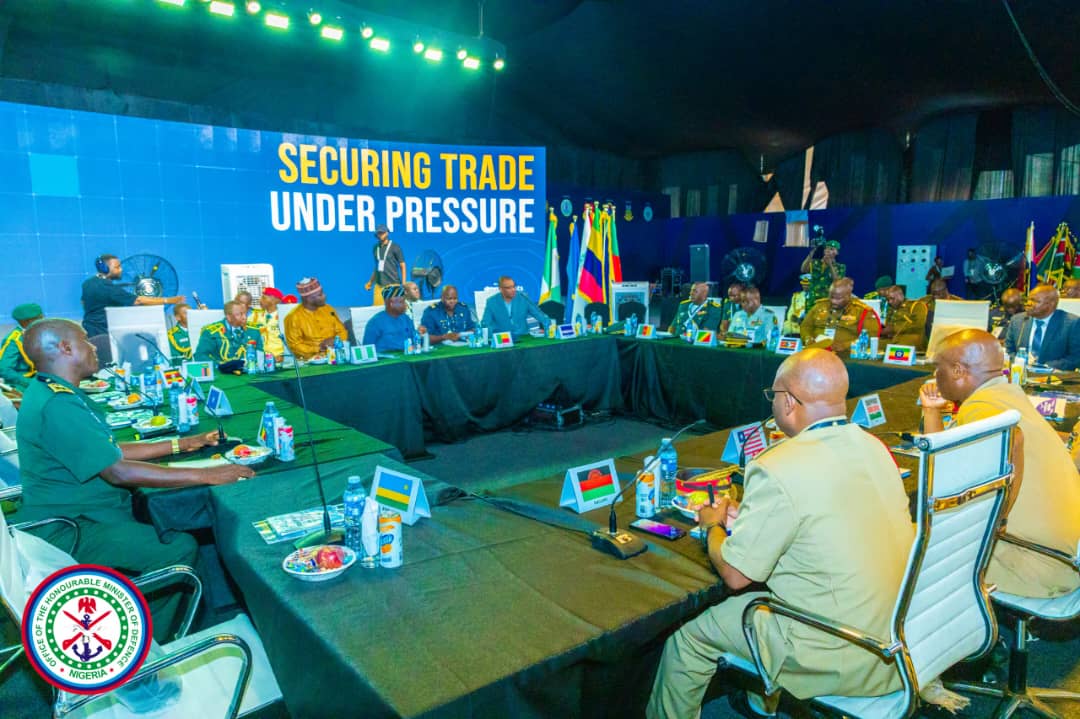

Nigeria has called on African nations to pursue greater strategic autonomy, strengthen collective security mechanisms and accelerate indigenous defence production as the maiden African Defence Exhibition and Conference (AFRIDEX 2026) came to a close in Lagos.
The Minister of Defence, General Christopher Gwabin Musa (Rtd.), made the call during a strategic engagement with visiting African Defence Ministers and Chiefs of Defence Staff, stressing that Africa must move from being a stage for external geopolitical competition to becoming an influential force shaping global security decisions.
According to Leah Katung-Babatunde, Special Assistant (Media) to the Minister of Defence, Musa reaffirmed Nigeria’s commitment to continental solidarity, collective security and the rapid development of local defence capabilities while outlining the country’s vision for a more self-reliant Africa.
The minister said increasing geopolitical rivalry and external interference underscore the need for African countries to adopt a common position rooted in national sovereignty and strategic autonomy.
He argued that defence partnerships should align with African priorities and avoid creating strategic dependence or weakening state sovereignty.
Musa also highlighted the importance of strengthening the African Union Peace and Security Architecture (AU-PSA), calling for greater African representation in global security decision-making and improved coordination among continental, regional and national defence institutions.
Addressing security challenges across the Sahel, Lake Chad Basin, Horn of Africa and parts of Central and Southern Africa, the minister said threats such as terrorism, violent extremism and organised crime require coordinated responses beyond national borders.
He reiterated Nigeria’s commitment to cross-regional cooperation between ECOWAS member states and the Alliance of Sahel States (AES), while supporting diplomatic and peacebuilding efforts in Sudan and the eastern Democratic Republic of the Congo.
He also advocated integrated governance approaches to address the underlying causes of instability and enhance civilian protection.
On defence industrialisation, Musa identified Africa’s heavy reliance on foreign military equipment, spare parts and technical support as a major vulnerability.
He called for increased local defence production, technology transfer arrangements and joint maintenance initiatives across the continent.
The minister further urged African countries to operationalise the African Standby Force (ASF) through sustainable financing, strategic mobility and rapid-response capabilities.
He also advocated stronger maritime collaboration, including enhanced domain awareness and coordinated naval exercises to secure vital sea lanes in the Gulf of Guinea and the Red Sea.
To ensure implementation of agreements reached at the conference, Musa proposed a structured follow-up mechanism among participating defence institutions focused on joint training, intelligence sharing and defence industrial partnerships.
“Africa’s security future must ultimately be determined by the collective resolve, capabilities and strategic choices of African nations,” he said, reaffirming Nigeria’s readiness to work with other countries towards a secure, united and self-reliant continent.
Participants at the meeting commended Nigeria for organising the inaugural AFRIDEX and pledged support for its sustainability as part of efforts to advance Africa’s security sovereignty.

