

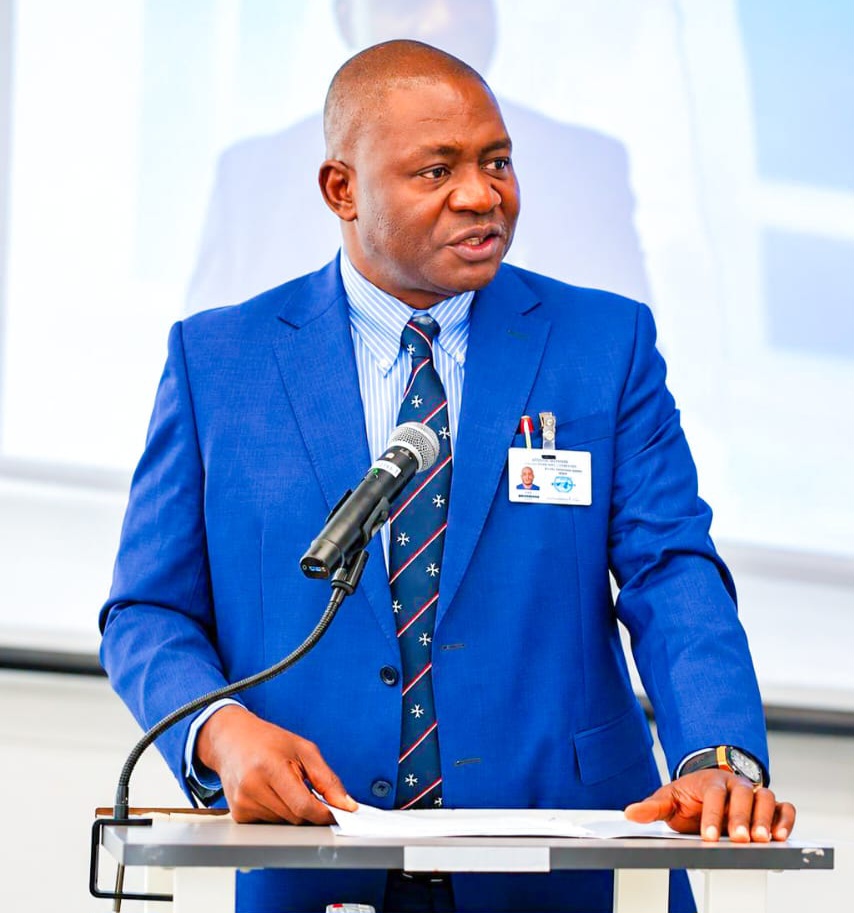

Nigeria has called on the international community to adopt a survivor-centred approach to counter-terrorism while strengthening partnerships to address evolving security threats across Africa and the Sahel region.
Speaking at separate events on the sidelines of the 81st United Nations General Assembly (UNGA) and at a ministerial meeting of the Group of Friends of Victims of Terrorism at the UN Headquarters in New York, Minister of Defence Gen. Christopher Musa said countries must move beyond emergency responses and invest in long-term support systems for victims of terrorism.
According to a statement issued by Leah Katung-Babatunde, Special Assistant on Media to the Minister of Defence, General Musa said terrorism continues to inflict devastating human and socio-economic costs, particularly in Africa, and called for sustained international cooperation to support affected communities.
The minister disclosed that Nigeria secured 865 terrorism-related convictions in 2026, describing the figure as evidence of the country’s commitment to accountability and the rule of law.
He added that the government remains focused on rescuing captives and providing post-rescue services, including medical care, psychosocial support, economic assistance and community reintegration.
Musa noted that Sub-Saharan Africa accounted for about 60 per cent of global terrorism deaths in 2025 and stressed the need for stronger mechanisms to support victims and survivors.
He proposed enhanced peer learning among states, broader partnerships involving civil society and victims’ groups, and targeted UN assistance for countries bearing the heaviest burden of terrorism.
He also commended initiatives led by the United Nations Office of Counter-Terrorism, including the Global Victims of Terrorism Support Programme and the Victims of Terrorism Associations Network (VoTAN).
At a high-level UNGA side event themed “Confronting Nigeria’s Multidimensional Security Challenges: A Whole-of-Society and Partnership-Based Approach”, Musa outlined measures being implemented by the Federal Government to strengthen security and national resilience.
The measures include the recruitment of 22,000 additional personnel into the Armed Forces, reorganisation of the Nigerian Army’s divisional structure, efforts toward establishing state police and forest guard arrangements, and the implementation of a unified intelligence and reconnaissance programme to improve coordination among security agencies.
The minister also highlighted efforts to strengthen domestic defence production through the Defence Industries Corporation of Nigeria (DICON), expand the use of drone technology for surveillance and improvised explosive device detection, and develop a comprehensive national criminal database.
Musa said Nigeria’s security challenges have national, regional and global implications, adding that lasting security depends on resilient communities, effective institutions, inclusive development and good governance.
Panel discussions at the event featured contributions from security, economic and technology experts who advocated stronger border management, intelligence sharing, economic recovery initiatives in conflict-affected areas, locally driven African solutions and improved cyber defence capabilities.
Musa reaffirmed Nigeria’s determination to defeat terrorism and banditry and called for enduring international partnerships while stressing that African countries must increasingly finance and sustain regional security mechanisms to ensure long-term ownership and effectiveness.
He expressed optimism that discussions at the UN would lead to practical areas of cooperation and concrete actions to strengthen security and support victims of terrorism.

