
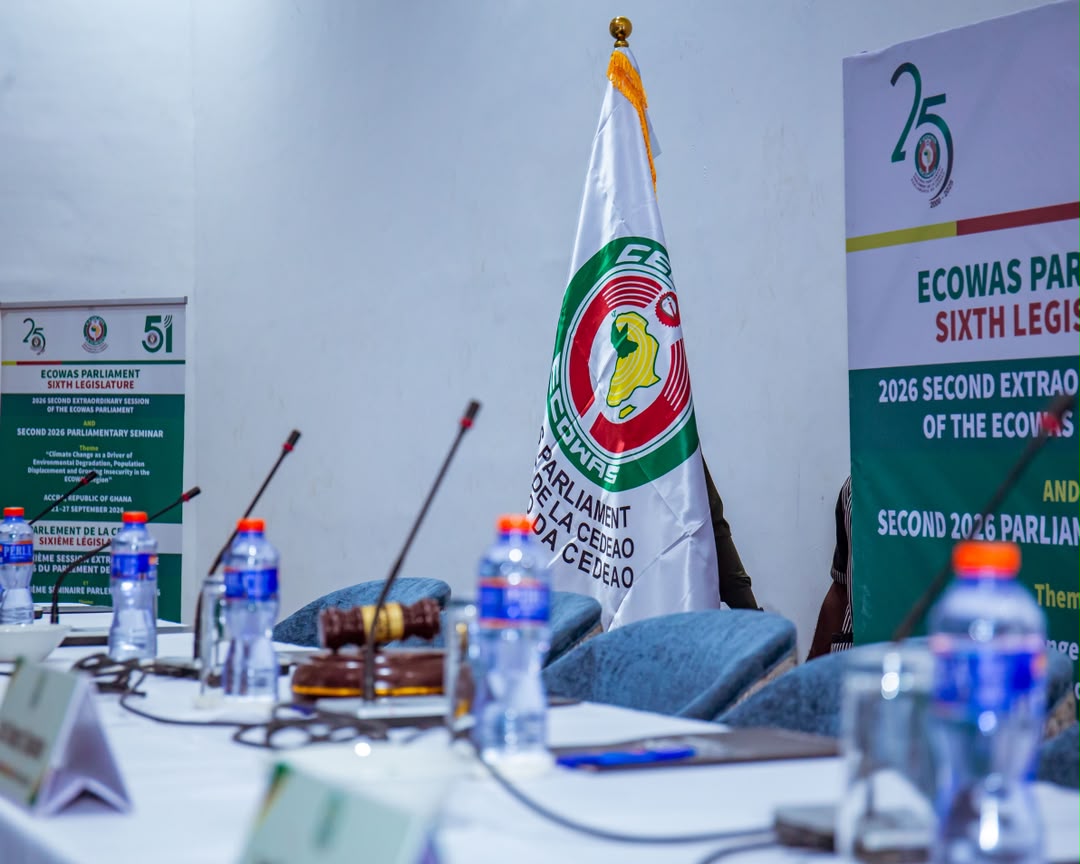

Climate change and its growing impact on security, livelihoods and human displacement dominated discussions at the ECOWAS Parliamentary Seminar in Accra, with delegates warning that environmental pressures are increasingly fuelling instability across West Africa.
Presentations from Nigeria, Togo, The Gambia and Cabo Verde highlighted how changing rainfall patterns, shrinking water resources and pressure on arable land are intensifying competition among farming and pastoral communities.
Nigeria’s report identified climate variability, agricultural expansion, environmental degradation and population growth as major factors worsening disputes over land and water resources.
It noted that farmer-herder conflicts are often compounded by communal tensions, banditry, organised crime and weak dispute-resolution mechanisms.
The report described internal displacement as a development, governance and security concern, citing the growing number of citizens displaced by conflict, terrorism, communal violence, flooding and other disasters.
Togo detailed efforts to manage transhumance through a National Transhumance Committee and a new 2026-2030 strategy aimed at addressing climate change, security challenges and increasing land pressure.
The Gambia showcased its Participatory Integrated Platform for Resilience and Food Security programme, which promotes climate-smart agriculture, livestock support and natural-resource management while raising awareness on farmer-herder conflicts.
Cabo Verde focused on the effects of climate change and water scarcity, outlining measures to improve water management, strengthen coastal protection and support climate-resilient agriculture.
Across the presentations, delegates agreed that climate resilience cannot be separated from food security, livelihoods, peace and social stability.
The seminar also emphasised the role of legislators in advancing climate adaptation policies, strengthening resource governance, supporting early warning systems and promoting dialogue among farmers, pastoralists, displaced persons and host communities.
Participants concluded that climate-related displacement, migration and resource-based conflicts require coordinated regional responses, noting that environmental challenges and population movements often transcend national borders.
They urged ECOWAS member states to invest in stronger institutions, sustainable livelihoods, climate adaptation measures and conflict-prevention mechanisms to ensure environmental change does not continue to translate into insecurity, displacement and loss of livelihoods across the region.

