

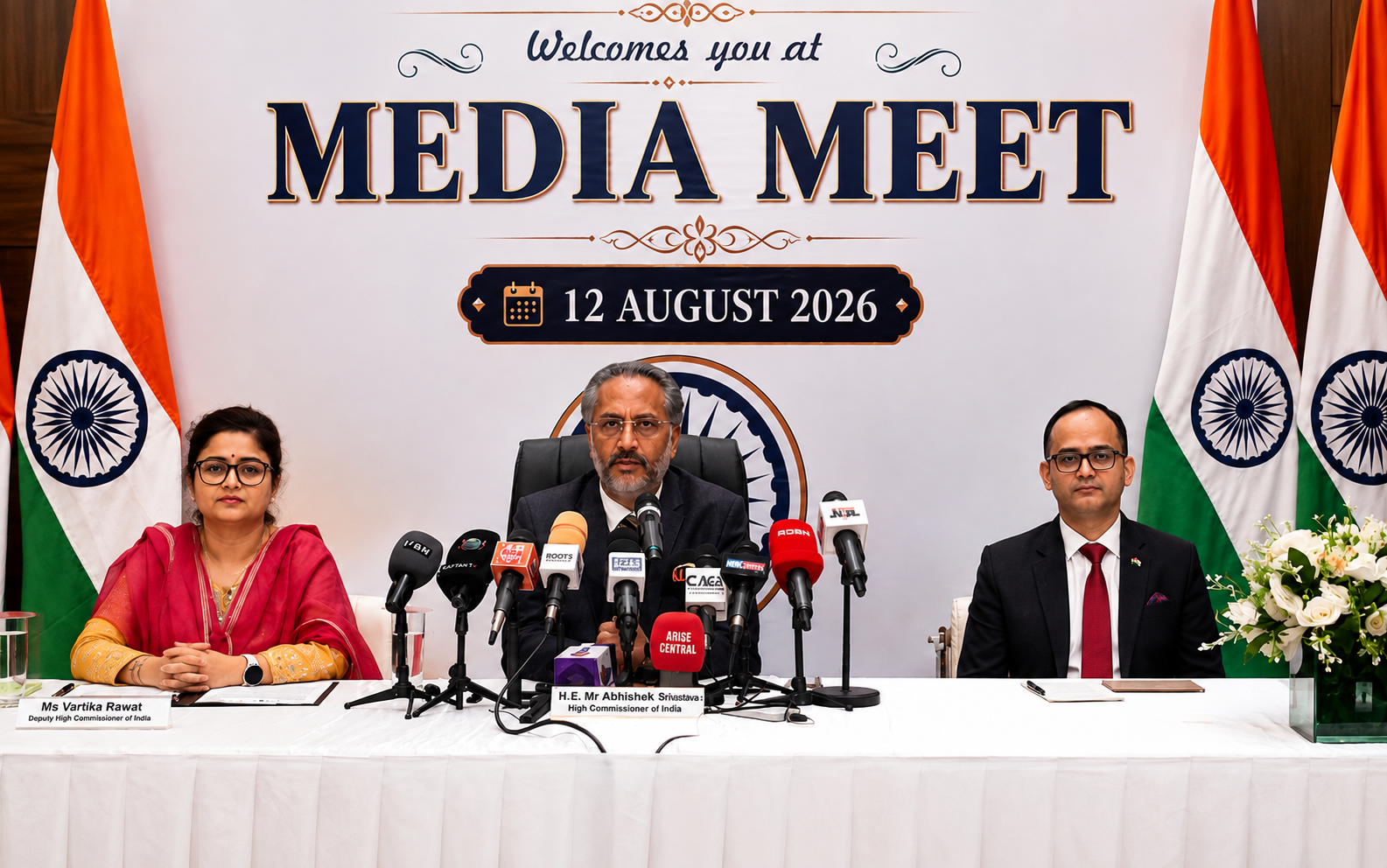

India and Nigeria are deepening their multidimensional strategic partnership across vital economic sectors, including energy, agriculture, technology, and manufacturing, solidifying Indian businesses as the second-largest employer of labor in Nigeria after the Federal Government.
Speaking at a media briefing in Abuja, Indian High Commissioner to Nigeria Abishek Singh revealed that more than 200 Indian companies now operate within the country.
These entities are active in sectors such as power, manufacturing, construction, agriculture, pharmaceuticals, consumer goods, healthcare, and services.
Through localized manufacturing plants, Indian firms have directly employed nearly 100,000 Nigerians, expanding the bilateral relationship beyond historical goodwill and crude oil trade into broad-based industrial and economic cooperation.
The expanding corporate footprint comes as trade between both nations reached approximately $9 billion in the 2025/2026 financial year, reflecting a notable increase from the $7.13 billion recorded in the 2024/2025 period.
Expanding on the bilateral ties, Deputy High Commissioner Vertika Rawat highlighted healthcare, food security, and capacity building as primary pillars of ongoing joint initiatives.
India currently supplies roughly 40 percent of Nigeria’s total pharmaceutical imports exceeding 90 percent for specific medicine categories and Indian businesses have invested an estimated $4 billion in local Nigerian pharmaceutical manufacturing.
Indian pharma exports to Nigeria reached $315 million in the 2024/2025 financial year.
Rawat also shared key outcomes from India’s sixth National Family Health Survey (NFHS-6), released in May 2026, which surveyed 639,000 families across 707 districts.
The data showed significant structural gains:
Maternal & Child Health: Antenatal care reached 96 percent, institutional deliveries rose to 90.6 percent, and child stunting dropped from 35.5 percent to 29.3 percent.
Immunization: Full immunisation for children aged 12 to 23 months grew to 87.1 percent, with 95.6 percent receiving vaccines through public health facilities.
Healthcare Financing: Coverage under health insurance or financing schemes expanded from 41 percent to 60.2 percent.
Socioeconomic Inclusion: Women’s internet usage doubled to 64.3 percent, while 90 percent of women now operate personal bank accounts.
Rawat noted that India’s healthcare policies—such as the Ayushman Bharat insurance model and technical training through the Indian Technical and Economic Cooperation (ITEC) program offer adaptable frameworks to support Nigeria’s push toward universal health coverage and shared prosperity.

